Canberra Rugby Riots Save the World

With the Rugby World Cup Final about to emotionally drain me for another weekend I thought it was worth briefly looking at a great chapter when three of my favourite things combined: Rugby, Canberra and Civil Disobedience.

Let me take you back to the good ol’ days when Rugby was amateur, people cared enough to take to the streets and South Africa was oppressed under the jackboot of the apartheid state.

ACT v South Africa

In 1971 the South African Rugby Team toured Australia and everywhere they went they were met with anti-apartheid protests. On 21 July 1971 they played at Manuka Oval in Canberra.

The picturesque white-picket fence of Manuka Oval was complemented with two lines of police officers and a 2 metre fence was erected around the boundary for the first time with sandbags placed over any loose fittings to prevent protestors using them as weapons. Additionally and rare for the time as, patrons were searched for bottles and cans for the first major usage of the Public Order (Protection of Persons and Property) Act.

The Menzies government had recently brought in the Public Order (Protection of Persons and Property) Act in May 13, 1971 to fill the gap in the law that prevented police from taking action against otherwise lawful protests.

Kindly, the “apparent policy of A.C.T. police has been to provide close escort, or a major show of force, for large demonstrations” but that actively combatting civil unrest “often tends to make the crowd remain compact, and likely to react violently to any attempts to break it up.”

The Police came down on the protesters in large numbers, but did not attempt to prevent or disperse the actual protest. Presumably a state based aggressive response to a peaceful protest against another state’s based aggression seemed a little too ironic. 400 Police came from NSW to assist their ACT colleagues.

The Canberra Times quoted a protester who complemented the ACT Police that day “I’ve seen police a lot rougher than they were here. In NSW they kick first, then ask them to move on.”

Over 1,000 protestors piled into Manuka Oval with whistles, making the entire match entirely insufferable for the players who were subjected to the non-stop blow of whistles making the referee’s calls almost impossible to hear.

Unfortunately the video was too large to post but here is a great 5 min clip of the game providing a perfect idea of how noisy the protesters were. 62 charges were laid that day and the issue became a point of contention in Parliament.

Over the course of the tour a number of players excluded themselves from the home teams in protest over the policies of the South African Government.

The game finished in a 34-3 drubbing of the ACT but the South African captain Hannes Marais stated that it was a hard and enjoyable game. South Africa stayed undefeated during the tour.

Wider Implications

The UN declared 1971 the International Year of Action to Combat Racism.

A SA cricket tour was scheduled for the 1971-72 summer tour but was cancelled and replaced with a World XI when the Chairman of the Australian Cricket Board, some guy called Donald Bradman, declared that there would be no more tours allowed from South Africa until the team was selected on a non-racial basis.

Australia was forced to examine its own attitudes towards it’s indigenous population in light of our ardent criticism of the South African regime and the hypocrisy that came with that stance.

The Whitlam Government later introduced a Government ban on sporting tours from South Africa, which was kept in place by subsequent governments and credited largely for the 1977 Gleneagles Agreement at the Commonwealth Heads of Government Meeting general ban on sporting relations between the Commonwealth and South Africa. The Commonwealth ban was echoed by the Soviet Union, but importantly not the United States.

The Commonwealth ban particularly hurt South Africa as their two major sports, Rugby and Cricket, were played almost exclusively in Commonwealth nations.

Despite the ban, New Zealand allowed the Springboks to tour in 1981 despite widespread public protest and International condemnation. NZ considered SA to be their greatest rival and did not want to pass up the opportunity to test their mettle. NZ subsequently came into line with the international position and no further tours occurred until the collapse of apartheid in 1994.

The Australian role in leading the charge against international sporting engagement with SA is considered to be one of the better weapons used against the SA government to highlight to it and its people just how out of touch their racist policies were with the rest of the world. The stance by the various boards and Whitlam government can be attributed in no small part to the popular protests that disrupted the Springbok tour and highlighted the morally shaky position of criticising a regime as racist but continuing to engage with it.

My basic premise is that: Protests around Australia followed the SA tour around, Canberra students et al.  protest in ’71, in ’72 Cricket Australia bans SA and Whitlam bans any racially selected teams and then in ’77 the Gleneagles Agreement is signed…ergo, small events in Canberra can change the world if the momentum is right and the passions are running strongly enough.
Aussie Team Killing it at Law Society World Cup

There’s very little i can say that this video doesn’t…engage video:

If I were to whinge it would be about how we still refer to footage or bitage as video despite video being “The Empire Strikes Back” dead. But I’m not whinging…so just watch it.

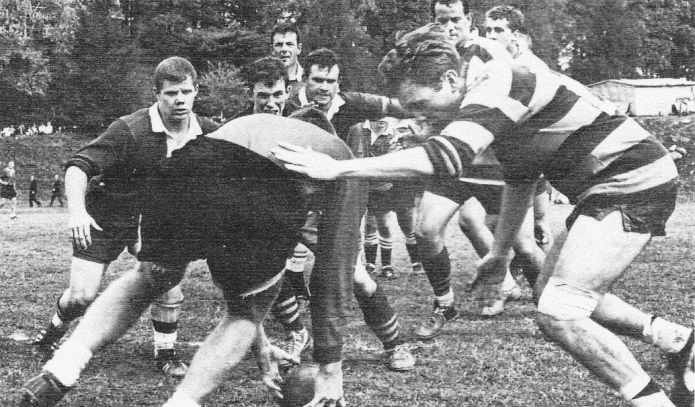
Also they’re playing at my brilliant old London club, Richmond Rugby Union Football Club…the oldest non-school club in the world, the first club to play a touring All-Blacks side and the first club to ever play under lights..but like I said, I won’t comment.

Equality -vs- Liberty. High Court Backs Equality.

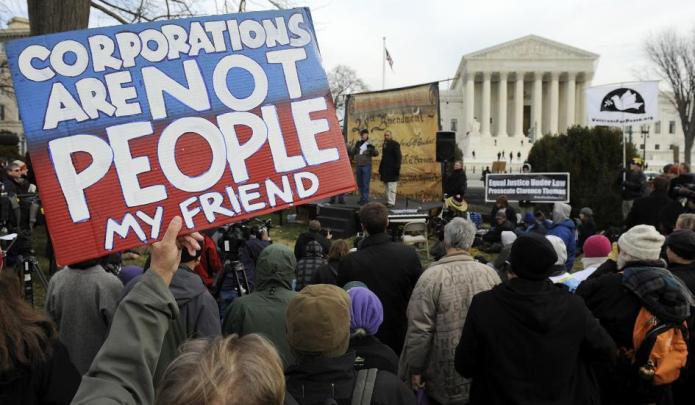
The High Court has given an ideological thumbing to our US cousins over whether there is a right to limit the influence of money in politics by upholding the ability to limit certain kinds of influence and participation. The decision stands in stark contrast to the US Supreme Court decision in Citizens United which opened the literal (not literal) flood gates to corporate money in political campaigning.

Citizens United

Citizens United v. Federal Election Commission (insert non-sensical US case citation here) involved answering 2 questions. Firstly, did the Federal Election Committee (FEC) limitations on donations from entities that were not individuals breach the first amendment right to free speech and secondly did restrictions on advertising regarding the film “Hillary” breach the first amendment?

Yes, No.

Citizens United can best be described as a right-wing attack special interest group that sought to advertise a film that was highly critical of Hillary Clinton and ran into resistance from the FEC who banned the efforts on the basis that they breached the Bipartisan Campaign Reform Act (BRCA). The BCRA was passed in 2002 and amended the Federal Election Campaign Act by targeting soft money and its influence in campaigns and political advertising. The act was praised as a rare achievement in campaign reform which has only increased the ire following the Supreme Court decision. Subsequently, the decision has become a HUGE hot button issue as the US starts the bizarre circus that is their Presidential Election process.

First Amendment to the Constitution of the United States of America:

Congress shall make no law respecting an establishment of religion, or prohibiting the free exercise thereof; or abridging the freedom of speech, or of the press; or the right of the people peaceably to assemble, and to petition the Government for a redress of grievances.

To paraphrase the judgment, the US Supreme Court essentially stated that all legal persons, such as corporations and trade unions, not just actual people have equal protection under the first amendment to not have their right to free speech impeded by an act of Congress. Practically this means that “mo money = mo free speech”, and no law can prevent an entity spending its money in this vein.

On the second question, the Court found that the FEC could still validly regulate the content of those advertisements and that preventing the “film” “Hillary” from being used in political advertisements did not violate Citizens United’s first amendment rights.

Equality v Liberty

The Court divided almost perfectly on ideological lines, with Chief Justice Roberts providing the deciding vote in both of the 5-4 decisions, which in itself is worth an article on how we should thank Lady Fortuna that our justice system is nowhere near as political as the US. Voting for sheriffs and judges? mmm, no.

The decision is disappointing but hardly surprising given the current climate of US politics and also the general history of the country right back to its foundations.

For the uninitiated, let me summarise western political/organisational foundations in 50 words or less. European structures tend to favour equality and community rights over individual rights. So your right to say whatever you want is restricted by the right of the community not to hear your racist rant on a bus or your right to keep your entire income is overridden by the right of the community to have a public police force, health system, defence force etc. Alternatively, the US system tends to favour individual rights, where community rights are still apparent but in a much more limited understanding. So your right to say what you what is more or less absolute over someone being offended by your retarded ramblings and your right to religious expression is complete even if it is expressed as part of a “profoundly evil movement from which gullible – and the not so gullible – members of the community required protection.”

The difference between the two theories is best broadly understood as individualism vs collectivism and explains the philosophical basis for the conservative and progressive parties in just about every western country.

McCloy v NSW

The High Court dealt with a similar issue in McCloy v NSW [2015] HCA 34 where Mr McCloy sought to challenge the investigation into him by the Independent Commission Against Corruption (ICAC) as invalid on the basis that his status as a property developer meant his implied right to free speech was impinged because of investigations relating to donations made as a “prohibited person” according to the Election Funding, Expenditure and Disclosure Act 1981 (NSW).

Mr McCloy is the former Lord Mayor of Newcastle and was being investigated for donating around $30,000 to candidates in the 2011 NSW State Election despite being banned from making donations for being a property developer.

The High Court was invited by Mr McCloy to find that the applicable sections of the act are invalid as they unnecessarily burden the implied right of political communication as previously upheld in the Court in cases such as Lange v Australian Broadcasting Corporation (1997) 189 CLR 520 at 560.

A primary difference between the Australian and US decision, is that the US right to free speech is implicitly stated in the Bill of Rights whilst the Australian right to free speech only exists because it has been found to exist through previous High Court decisions.

Finding

The Court found that certain limitations are justified and in fact necessary to ensuring the overall health of our system. In (ANU grad) Gageler J’s words:

that such restriction as each imposes on political communication is imposed in pursuit of an end which is appropriately characterised within our system of representative and responsible government as compelling; and that the imposition of the restriction in pursuit of that compelling end can be seen on close scrutiny to be a reasonable necessity. [155]

In other Gageler J gems that will no doubt be quoted in later decisions and possibly placed in the fine print of protest placards:

Corruption is perhaps more readily recognised than defined. One universally recognised form of corruption, however, is for a public official to receive money in a private capacity in circumstances calculated to influence the performance of the official’s public duties. The corrosive impact of that form of corruption on the functioning of representative and responsible government was addressed in two decisions of this Court in the 1920s, in terms which resonate with the reasons later held to necessitate the implication of the constitutional freedom of political communication. [167]

and

There is no place within the system of representative and responsible government as it has developed in Australia for the notion, recently reiterated by a narrow majority of the Supreme Court of the United States, that the legitimate end of limiting campaign financing is the elimination of “quid pro quo corruption”. The legitimate end of limiting campaign financing here surely extends to the elimination of what has there been labelled “clientelism”:”the danger that officeholders will decide issues not on the merits or the desires of their constituencies, but according to the wishes of those who have made large financial contributions valued by the officeholder” [181]

Implications

This is a very promising decision for those concerned about the direction US electoral law is heading and to that extent the decision reflects recent sentiments expressed in UK and Canadian judgments asked to consider similar cases.

In this way, the High Court has made an implicit decision that when considering questions of political influence, individual equality is more important than individual liberty. This is in keeping with our general preference for collectivism where “Your right to swing your arms ends just where the other man’s nose begins.”