Happy Birthday Austlii: 6 Facts

Last week Austlii celebrated finally being able to drink in Japan, get married in Thailand and play Roulette in New Zealand.

As Austlii celebrates it’s 20th birthday, Lawyers from around Australia begrudgingly listen to their seniors talking of the day when they had to run over to the court library, beg friends at bigger firms or pretend to still be a student when they desperately needed to look up some case law last minute.

For the uninitiated, Austlii is an online legal database that catalogues journals, decisions and legislation from around Australia and provides it free to the public. Austlii is offically the Australasian Legal Information Institute and is maintained by the UTS and UNSW law faculties, though it is funded by donations from around Australia including the ANU, the ACT Law Society and private practitioners from around Canberra.

Austlii is part of a broader free access to law movement along with 34 other organisations providing similar services in their various parts of the world.

So, happy birthday Austlii and lets look at some fun facts:

  1. Austlii receives over 600,000 page hits everyday
    (so presumably 600,001).
  2. Austlii receives about 30% of all legal database traffic in Australia.
  3. It costs approx $1m to run each year and relies on over 250 organisations including Universities (~30%), law societies and law firms (~30%)  and corporate sponsors and individual gifts for the rest.
  4. One of the biggest donors is a legal insurance firm which believes Austlii is the best prevention for negligence amongst small firms.
  5. Austlii doesn’t index cases with search engines to protect the privacy of those involved.
  6. Over 700 different legal publications are regularly catalogued.
 

Calling a Lawyer Dennis Denuto is Not Defamatory

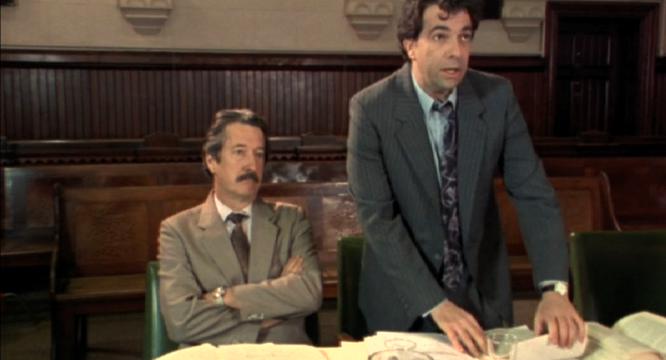
Every Lawyer has at some stage been mocked by being called “Rake”, “Lionel Hutz” or the ever favourite “Dennis Denuto”.

I personally prefer the more obscure “My Cousin Vinny” or “Bizarro Atticus“. Either way, just about every lawyer cops benign banter and just has to smile sweetly and suppress retaliating against their career-challenged antagoniser.

anigif_enhanced-16628-1390976119-17.gif

Perhaps Queensland lawyer Brett Smith had simply heard the jibe one too many times in his life and after being called “Dennis Denuto” and a deluge of other names in open court, Mr Smith launched a defamation action against the party who saw fit to mock him so brazenly.

Brett Smith was appearing in a Family Law matter for his daughter-in-law, and the former partner of his daughter (the respondent in the family proceedings). The ex-partner referred to Mr Smith as “Dennis Denuto from Ipswich” in Court and in emails which led to Mr Smith claiming $250,000 in damages and an apology.

In defending the defamation the solicitors had more fun at Mr Smith’s expense and took every convenience to refer to Brett Smith as the “BS lawyer” from his “BS practice” with his “BS website” . As someone with BS initials, this is a pain I know all too well.

A range of defences were deployed including “truth”, “the vibe” and that it was actually a favourable comparison because DD was eventually victorious in the High Court.

anigif_enhanced-32068-1390980461-13

The Queensland District Court passed up the opportunity to join the frivolity and dismissed the action on the basis of triviality under s33 of the Defamation Act 2005 (Qld). Going further to find that Mr Smith had in fact “called in an airstrike on his own position” [52] by fighting the imputation and unwittingly conjuring the Barbara Streisand effect. The BS effect is a well-known internet phenomenon  whereby the action of trying to prevent a negative thing from getting attention leads to the thing getting attention more than it would have otherwise.

In Mr Smith’s case the insults got international news coverage following his filing and importantly you’re now reading about it as well, whereas chances are that none of us would have heard of the jibes if Mr Smith had just rolled his eyes.

Historical ACT Fines Easily Challenged

A “computer glitch” usually refers to the person operating it.

ACT Policing recently announced that more than 1500 motorists received up to 8 year old traffic infringement notices as a result of a “computer glitch”.

CT: “Computer Glitch” blamed as ACT drivers forced to pay old traffic fines

Motorists face suspension of their licences if they fail to pay the fines and many recipients are understandably outraged.

Kamy Saeedi Law has labelled the AFP and RTA actions as “likely unlawful” recently on local radio and in the Canberra Times.

At least one such ticket has already been successfully challenged prior to the breaking of the news that over 7000 such historical tickets were re-issued. The government “revealed the advice the RTA has received confirms the pursuit of these matters years later is unreasonable”.

As the arguments for challenging the tickets relates to ongoing client cases I cannot comment directly at this stage how the tickets can be successfully challenged but the crux of the argument rests on procedural fairness and the broad principles of Criminal or Administrative Law…
or you know…the vibe.

“It goes against basic principles of criminal justice to make an accused person prove they should not be forced to pay the fine,”

Any recipient is free to challenge the ticket on their own but the surest way is to contact a criminal lawyer to avoid any potential loss of licence.