Many of us grew up on the original ACAT trilogy and may view these new episodes as somewhat of a hollow imitation. But the future waits for no one, time and tide, the young will eat the old, whatever the expression is that means I’m going to do it anyway, so buckle up.
To reminisce, treat yourself to one or all of the original ACAT trilogy first: A New Limit, The Counterclaim Strikes Back and Return of the Enforcement Officer.
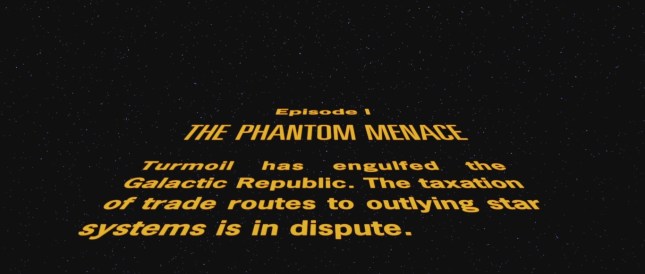
ACAT Jurisdiction – Ends at the Border
By virtue of the ACAT Act, ACAT has first jurisdiction in many matters including disputes under $25,000, residential tenancy disputes, fencing and boundary disputes, administrative review, energy and water and mental health assessments. Importantly, for reasons we will shortly discuss, first jurisdiction does not equal exclusive jurisdiction. The enacting legislation for the ACAT purported to set up a system that diverted a large proportion of matters, mostly minor and administrative matters out of the court system and into a specialist jurisdiction.
A recent decision out of the High Court has established some pretty strict limitations on the purported jurisdiction of tribunals all over Australia. Essentially, that jurisdiction ends at the border, regardless of what the enacting legislation purports to do.
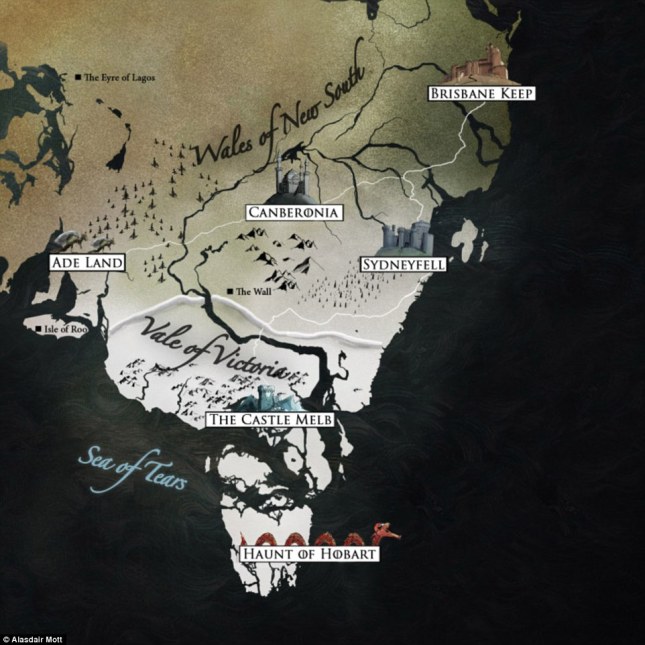
Recently in Burns v Corbett [2018] HCA 15 the High Court held that New South Wales’ civil and administrative tribunal, the NCAT, cannot purport to exercise jurisdiction over residents of other states or territories. The Burns decision effectively confirms Canberra’s status as a powerful city-state only.
Kiefel CJ, Bell and Keane JJ in the majority opinion:
- The first issue in these appeals is whether the Commonwealth Constitution precludes the Parliament of a State from conferring jurisdiction in respect of a matter between residents of different States within s 75(iv) of the Constitution on a tribunal which is not one of the “courts of the States” referred to in s 77 (“the Implication Issue”). If that issue were to be resolved in the negative, the further issue would arise as to whether a State law which purports to confer jurisdiction on such a tribunal in respect of such a matter is rendered inoperative by virtue of s 109 of the Constitution on the basis that it is inconsistent with s 39 of the Judiciary Act 1903 (Cth) (“the Judiciary Act“) (“the Inconsistency Issue”).
- The Implication Issue should be resolved in the affirmative. Considerations of constitutional text, structure and purpose compel the conclusion that a State law that purports to confer jurisdiction with respect to any of the matters listed in ss 75 and 76 of the Constitution on a tribunal that is not one of the courts of the States is inconsistent with Ch III of the Constitution, and is, therefore, invalid.
The High Court’s reasoning appears to only apply to natural persons and not corporations (Australasian Temperance and General Mutual Life Assurance Society Limited v Howe (1922) 31 CLR 290).
Howe’s Case and several others have affirmed that the reference in s75(iv) to ‘resident’ is a reference only to natural persons. The ‘great dissenter’, Justice Kirby predicted in 2003 that the narrow definition of natural persons would be proven restrictive over time. In British American Tobacco Australia Ltd v Western Australia (2003) 217 CLR 30, 72–3 [109]–[110] Kirby J wrote:
The decisions establishing that principle involved a remarkable narrowing of the constitutional language. In my view, it is a narrowing unjustified by the text or the context. In many ways it is reminiscent of judicial holdings in Australia and elsewhere at the same time to the effect that a ‘‘person’’, when referred to in legislation (for example for the purpose of admission to professional practice) did not include a woman. The only justification for such a narrow interpretation of s 75(iv) of the Constitution was the expressed judicial fear about an extension of the jurisdiction of this Court that might result in an inundation of work that this Court could not easily deflect to other courts in the views then held concerning the obligation of this Court to discharge a jurisdiction conferred on it by the Constitution.
…
In a proper case, this Court should reconsider the early determination that corporations, including statutory corporations, cannot be ‘‘residents’’ of a different State for the purposes of s 75(iv) of the Constitution. Self-evidently, corporations are, and were at the time when the Constitution was made, legal persons. They were then, and still are, frequent litigants in the courts. Their existence was contemplated by the Constitution itself. Although in 1985 in Crouch v Commissioner for Railways (Q) this Court declined to reopen its early holding on the meaning of s 75(iv), the decision is open to the strongest doubt and criticism. In my view it is wrong. One day this Court will say so.
Earlier Limitations
Other jurisdictional limits have already been addressed: for example, VCAT had earlier ruled against their own jurisdiction in relation to serving process in foreign countries. In Gluyas v Google Inc [2010] VCAT 540, an Australian sought to bring an action against Google for not taking down an autism hate-blog based out of the United States. VCAT dismissed the application for other reasons but did note specifically that VCAT had no powers to effect process outside of Australia. Regardless of how well the legislation is written, it is likely the same situation here.
Solutions
Victoria presents one interesting solution to the problem. There is a little-known provision in Victoria whereby proceedings can be issued in both a Court and VCAT. The President of VCAT is a Supreme Court Judge and Vice Presidents of VCAT are County Court Judges, so there are already judges who sit in both jurisdictions. Their legislation allows for special appointments whereby a Judge could continue hearing a VCAT case, out of the jurisdiction, and also wear the hat of a Judge.
The ACT position of jumping jurisdictions is somewhat more complicated.

Any party anywhere, international or interstate, can still consent to the jurisdiction. However, it appears that the only feasible solution for someone looking to bring an action in the ACT, where one party is interstate, is to bring the action in the ACT Supreme Court. The situation does get complicated though, despite the Supreme Court clearly holding inherent jurisdiction over any ACAT dispute, there is no ability to transfer proceedings. An ACAT dispute can have a question referred to the Supreme Court (s84) and an ACAT decision can be appealed to the Supreme Court (s86). But the Supreme Court would likely have to dismiss the proceedings on the basis that the original process was deficient for lack of jurisdiction.
Filing a matter in the ACAT for a natural person costs $338, filing in the Supreme Court costs $1,669. There is no specialist fee for ACAT referrals or for matters that cannot be started in the ACAT because of this deficiency.
For example, if you have a $2,000 bond, your landlord has unjustly kept it, but your landlord is based in Sydney, then you have no option but to file in the Supreme Court for $1,669.
The good news is that if you are in the right, rule 1722 would mean you are entitled to 100% of costs, as opposed to the ACAT presumption of 0% costs. Of course, if you are incorrect, then a simple bond dispute could lead to thousands of dollars of costs if, as a punter, you happen to get the law wrong.
The ACT is particularly susceptible to this problem given the size of the Territory and the increased likelihood that parties to transactions will be based in NSW or further afield. Essentially, the stakes are hugely raised the second you step into the Supreme Court jurisdiction, which is entirely against the original purpose of the ACAT.
This is a matter for the legislature but if I may, I humbly propose three solutions:
- Create a low-cost filing fee with a presumption for no costs in the ACT Supreme Court to catch those cases that cannot find jurisdiction or where consent jurisdiction is lacking – this one is possibly as simple as allowing for the rules or even a practice direction to state that upon application the Court will apply the rules and practices of the ACAT (+the fee/costs structure);
- Amend the ACAT structure to have Supreme Court judges appointed as Presidential Members to create a new field of “two-hat” law, previously not in existence in the ACT (but at least Victoria has precedence to assist);
- Two Words: Singular Jurisdiction. Abolish the ACAT. Abolish the Magistrates Court. Everything is the Supreme Court only. We would have singular rules and simply have different levels of judicial officers hearing cases. Members can sit as Registrars when needed, Judges can sit as Magistrates on bail decisions etc. In a jurisdiction our size, there are great advantages to this approach. Massive administrative savings would be realised and the same rules can remain in place to dictate which officer should deal with each case and handle the appropriate costs positions and so on.
Point number 3 requires its own post, but if you catch me at the pub and have a spare hour or two I’ll do my best to convince you of the benefits of a sole jurisdiction. By the way, we will shortly have a big shiny new Court precinct building that would serve a single destination well, but I’ll also be the first to admit that this is a bit of a pipe dream…for now.
The High Court decision in Burns has huge implications for a jurisdiction the size of the ACT and once again I find myself writing about the ACAT facing difficult foundational issues that have existed since inception but are one-by-one coming to the fore, with real implications for those with cause to seek ACAT’s intervention.