South Australia has a Ban on Being Too Frigid

Apologies already for the misleading title, but “South Australia Has Limits on the Size of Your Fridge” is nowhere near as sexy.

The law itself is easy enough to explain but the purpose behind it is somewhat more intriguing and required a lot more research than you would expect…so you’re welcome.

Disclaimer: All puns are the pundits own and Commercial Lore takes no responsibility for the puns, both terrible and amazing, contained herein.

The Law

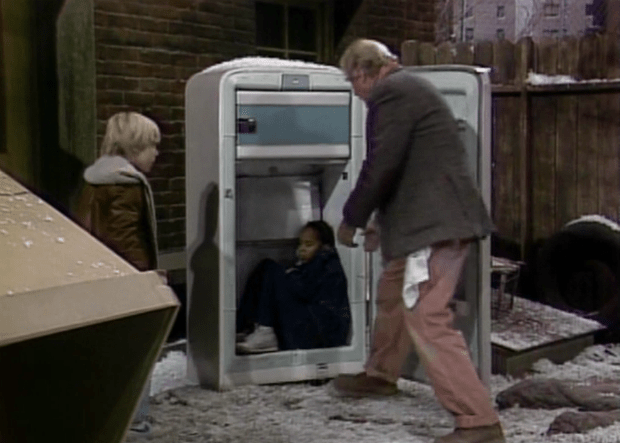
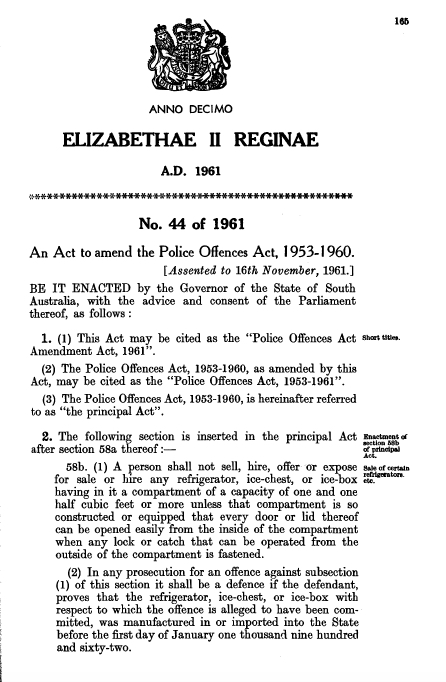
The South Australian law was enacted in 1961 in response to an apparent spate of deaths following people becoming trapped in fridges that could only open from the outside.

Under s58b of the Summary Offences Act 1953 (SA), it is illegal to sell or hire a fridge over 42.5 litres that cannot be opened easily from the inside. Or as the law originally stated any fridge over “one and one half cubic feet”…simpler times. Make South Australia Great Again.

A grandfather clause was also introduced providing an exception for any fridge that was purchased or imported to South Australia prior to 1962. The penalty for a person found with a husky esky is $750 of cold hard cash.

In addition to being illegal to sell or hire one, it is also illegal to dispose of one either through dumping (already illegal) or even placing one on a “dump, tip or sanitary depot”.

pg1-fridge-copy

pg2-fridge-copy

It’s proven impossible to find any convictions under this section but one could presume that at some stage a policeman broke out a measuring tape and asked whether their refrigerator was running.

Large Fridges Used to be Cool

This does not just appear to be a silly law, but rather an interesting time-capsule. It makes sense that fridges should be able to open from the inside to prevent unfortunate events. But compared to other states, it is interesting to consider whether South Australia’s fridge death problem was so great that they had to uniquely regulate the types of fridges people could sell. This law is probably past its use-by-date but it’s not hurting anyone, so you know, who cares.

“The first thing we do, let’s kill all the lawyers”

Zelino and Ors v Budai [2001] NSWSC 501 (24 July 2001) is a case of some notoriety involving fraud, deception, backsta…

Stop reading. Put the popcorn in the microwave. I’ll wait.

Is your popcorn ready? Good. I’m just going to republish verbatim the opening two paragraphs of the judgment:

1) In 1725 Mr Everet commenced proceedings in the Court of Exchequer against Mr Williams seeking an account of partnership profits. The plaintiff alleged that the partnership between himself and the defendant dealt in commodities such as plate, rings, watches and other valuables, that the plaintiff and the defendant had dealt successfully in these commodities in the course of the partnership but that the defendant had failed to come to a fair account with the plaintiff concerning the partnership profits. In the course of the trial it was revealed that the business in which the partners were engaged was actually highway robbery and that the plaintiff was aggrieved that the defendant had not handed over a fair share of the spoils. The case was thrown out of Court, both parties were hanged, the plaintiff’s solicitors were attached for contempt and the plaintiff’s counsel was made to pay the costs of the proceedings: see Everet v. Williams (1893) 9 LQR 197; cited in Burrows v. Rhodes [1899] 1 QB 816, at 826 per Grantham J.

2) Human nature does not change. These proceedings are another example of that obstinate folly which blinds people to the ruin to which their course of action must inevitably lead if they insist upon pursuing it. For at the heart of these proceedings lies a series of revenue frauds perpetrated by the plaintiffs which would never have seen the light of day had the plaintiffs not set their minds on coming to a court of law to vindicate their grievances.

HOLY MOLY. Strong words. When you’re sitting in court and the judgment opens with a story about both parties being hanged and the solicitors found in contempt you know you’re in trouble.

Human nature does not change

The heart of this case is about dodgy individuals and the professionals who assist them. It is a story that should remind every legal practitioner, and in fact all professionals, that your client’s problems are not yours. If you assist in their criminal scheme, at worst you are part of their criminal enterprise and at best you are undertaking your own unique crime.

In Zelino, a group of investors purchased a heritage property in Cremorne and hired Mr Budai, a registered tax agent to structure the group’s tax affairs. The tax scheme was fraudulent, at the knowledge of all parties, and the lodged returns significantly understated the group’s taxable income.

The ATO provided their assessments and determined that the group still owed some tax. It “rankled” the group that they had to pay any tax so they spoke to their solicitor. Their solicitor, aware of the fraudulent scheme, approached a tax specialist and provided him information about the fraud. After a lengthy and expensive period of consideration, the tax specialist provided representations to the ATO that Mr Budai had a poor knowledge of the law and was incorrect in the original assessment. The ATO accepted the submissions based on further fraudulent and misleading statements and declared that no tax was payable.

The group was still not happy and commenced proceedings to sue Mr Budai for the costs of the specialist.

if im going down

In the ensuing Supreme Court action, all of the roles of the co-conspirators were revealed including that of the solicitor who was also appearing. Everyone involved was, frankly, stuffed:

238) It would be an affront to justice and to all professional people striving to maintain the ethical standards of their calling if the Court, having become aware of possible serious breaches of the law by members of a profession, turned a blind eye and failed to draw those matters to the attention of the relevant authorities and professional regulatory bodies for further investigation.


244) According, I make a further direction as follows: I direct that the Registrar of the Court forward a copy of this judgment to the Australian Taxation Office, the Tax Agents Board, the Law Society of New South Wales, the Australian Institute of Chartered Accountants and the Public Accountants Registration Board.

The Judge even ordered that a letter be sent with the judgment to the Law Society concerning a member of the group who was formerly a solicitor to provide evidence of his character should he attempt to apply for admission in the future.

People Can Change

Nope. These lessons seem to stay only relevant for a certain amount of time and usually only to a limited audience.

In the ever-unfolding saga that is the ATO PAYG scandal, at least two lawyers have been revealed to be intimately involved in the scheme and will now be charged along with their former clients. The profession doesn’t want or need lawyers willing to engage in this chicanery, but there’s usually someone waiting to take their place.

The line in the title of this piece is from Shakespeare’s ‘Henry VI,” and is often misquoted to posit that maybe society would be better if we killed all the lawyers. Shakespeare intended the opposite reading. The line is uttered by Dick the Butcher who believes the rebel he supports could climb the chaos ladder if they were to cause a bit of mayhem and the people who would first get in his way are the lawyers and judges charged with administering justice. I’m definitely probably biased, but I don’t think we should “kill all the lawyers”, just remind them that schemes to defraud the public purse and other such arrangements cannot succeed if lawyers and other professionals are keeping their professional duties at the forefront of their minds.


Legal Principle Based on Fictional Characters to be Examined

The best laid schemes o’ Mice an’ Men, Gang aft agley, An’ lea’e us nought but grief an’ pain, For promis’d joy! Still, thou art blest, compar’d wi’ me!

Setting legal precedents on fictional characters could work in theory. I would love to examine a world where decisions about who owned a rug was adjudicated by asking “what would Geoff ‘the dude’ Lebowski do?” or “Would Stringer Bell, as a reasonable person, have made that property transaction?”. It would certainly make things more interesting.

Get to the point

So the United States is a country. And Texas is a state in that country. And sometimes they’re known, though not the most known (am I right Oklahoma?!), to pass crazy legal precedents.

Anyway, in Texas they still have the death penalty. Just like Sudan and Iraq? Yeah, I know it’s weird. So in 2002 the US Supreme Court decided 6-3 that the 8th amendment ban on “cruel and unusual punishments” precluded states from executing people who were considered mentally retarded. (and before anyone says anything, that is a completely acceptable medical term, retarded just means less developed or prevented, blame society if the word has taken on a new meaning).

In Atkins v Virginia the US Supreme Court determined that a person’s disabilities in areas of reasoning, judgment, and control of their impulses means that their level of moral culpability is diminished and therefore must fall short of the normal death penalty pre-requirements to find the most serious adult criminal conduct present. The major problem was that the Supreme Court left open the definition of mentally retarded…you must see where this is going.

So shortly after that decision, the “crazy” states started re-writing their laws to comply with new requirement that you could, in some circumstances, execute a mentally retarded person. Texas took a novel approach (pun definitely intended). A lower court Texas Judge decided to refer to material that the common man could relate to. Much like the ancien common law requirements of the “common passenger on the Clapham omnibus” or “Bondi Bus” in Australia, Texas decided to resort to a book that every year 10 in the western world has read.

73d0b8d9b1f47833fcfb51108665abfb3cccd142cb1c807c106f7802f7cc5baf_1

A lower court Texan Judge took this approach and in 2004 had the reasoning affirmed by the Texan Court of Criminal Appeals. The basics of the decision is that Texas has adopted what is known at the “Lennie test“; if a person is more retarded than Lennie then they are safe to execute but if they have more cognisance than Lennie then they are not safe to execute.

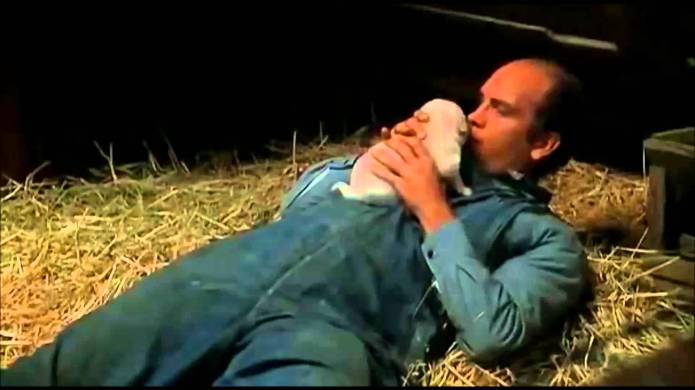
In Steinbeck’s classic “Of Mice and Men”, Lennie was a kind-hearted oaf whose strength was a weakness when juxtaposed against his child-like innocuous understanding of the world. [SPOIL-IES ALERTS-IES]. Lennie’s strength comes back to bite and first he pets a puppy to death and then steps up his game and strangles the rancher’s son’s wife to death when he’s confused by her sexual advances. I must add, beautifully played by the masterful John Malkovich, truly the Bard’s moksha.

Judge Cathy Cochran branched out and said:

“Most Texas citizens might agree that Steinbeck’s Lennie should, by virtue of his lack of reasoning ability and adaptive skills, be exempt” from the death penalty, she wrote. “But, does a consensus of Texas citizens agree that all persons who might legitimately qualify for assistance under the social services definition of mental retardation be exempt from an otherwise constitutional penalty?”

This test went unchallenged until the Texan Courts decided to uphold the execution of Bobby J Moore based largely on the definition of mental retardation. The Texan courts determined that the definition of mental retardation in 2002 under the DSM had since changed which meant that Bobby Moore could be safely executed regardless of the fact that contemporaneous bodies consider that Bobby Moore is sufficiently mentally retarded to be executed.

Mr Moore killed a 70-year old grocery clerk and no one disputes that Mr Moore is mentally challenged. To quote a psychologist in the 2014 hearing Mr Moore most likely “suffers from borderline intellectual functioning.” Including that Mr Moore could not likely tell the time, what day of the week it was, and that his IQ could be as low as 57, being mentally retarded by any measure of the word.

Essentially Texas was relying on the definition of “mentally retarded” as it existed in 1992 instead of adopting a floating definition.

Under current medical standards Mr Moore is considered mentally retarded however not by the the definition of 1992, and is therefore liable for execution as far as Texas is concerned.

The Supreme Court 

As the Senate continues to refuse to hold confirmation hearings for a replacement justice for Antonin Scalia (accurate at time of publication) the Supreme Court has been hesitant to hear any major cases that would have wide implications or that would likely have a unsatisfactory 4-4 split. So this session we are getting the “Lennie” case, determining whether the Federal government can fund spongy playground surfaces and whether it is legal to gerrymander districts on racial lines.

One alternative interpretation that could unite the justices was posited in the Yale Law Journal last year in the article “A reassessment of common law protections for “idiots”” and stated that by applying the standard that existed at the time of the 8th amendment instead of the 1992 definition would protect anyone with the mental faculties below that of a 14 year old. This would likely be sufficient to protect Mr Moore and probably Lennie as well.

The irony is that Lennie himself would not likely be protected under the current Texan test because in the novel he attempted to conceal his crime by hiding the body. Thomas Steinbeck, John’s son, has railed against the Lennie standard:

Prior to reading about Mr. Wilson’s case, I had no idea that the great state of Texas would use a fictional character that my father created to make a point about human loyalty and dedication, i.e., Lennie Small from “Of Mice and Men,” as a benchmark to identify whether defendants with intellectual disability should live or die.

My father was a highly gifted writer who won the Nobel Prize for his ability to create art about the depth of the human experience and condition. His work was certainly not meant to be scientific, and the character of Lennie was never intended to be used to diagnose a medical condition like intellectual disability. I find the whole premise to be insulting, outrageous, ridiculous and profoundly tragic. I am certain that if my father, John Steinbeck, were here, he would be deeply angry and ashamed to see his work used in this way. And the last thing you ever wanted to do, was to make John Steinbeck angry.