I Want A Reasonable Police Officer Dawg

Common sense is supposed to reign in the law, but so often it doesn’t, especially when the desired pre-conceived outcome disagrees with common sense.

The United States has a little thing called the 6th Amendment:

VI: In all criminal prosecutions, the accused shall enjoy the right to a speedy and public trial, by an impartial jury of the state and district wherein the crime shall have been committed, which district shall have been previously ascertained by law, and to be informed of the nature and cause of the accusation; to be confronted with the witnesses against him; to have compulsory process for obtaining witnesses in his favor, and to have the assistance of counsel for his defense.

Similar protections for due process are also present under the 5th amendment.

A few hundred years of jurisprudence have qualified these rights into certain protections and processes that law enforcement and the courts are required to apply to ensure the constitutional rights of an accused are complied with.

For example: In a police interview, when a suspect requests a lawyer, the interview must end until a lawyer is supplied. If the police continue to question, they have breached the suspect’s rights under the 6th amendment and risk the admissibility of evidence. (Edwards v Arizona)

Sometimes the request is ambiguous and sometimes it isn’t but the Police think that a lawyer may get in the way of a conviction (they’re known for doing that).

This is not what’s up.

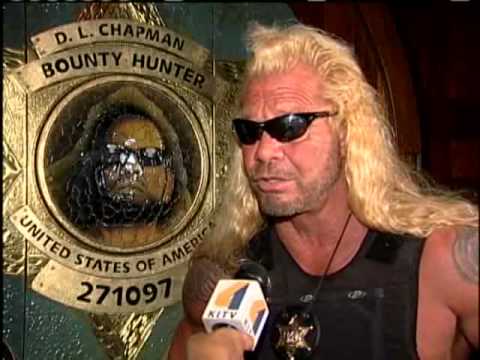
Warren Demesme voluntarily agreed to have a chat with the police at an interview down at the station. During the interview, Desmesme realised that he was being questioned as a suspect in the sexual assault of a child and promptly requested a lawyer. Or did he? Kindly parse the following sentence:

“I know that I didn’t do it, so why don’t you just give me a lawyer dawg ‘cause this is not what’s up.

Desmesme sought to have the evidence from the interview excluded at his trial. This was denied and he was convicted based on that evidence. Desmesme appealed on the basis that his 5th and 6th amendment rights were violated. The appeal was denied. Desmesme appealed again, to the Louisiana Supreme Court. The Louisiana Supreme Court denied to take the case but Justice Scott Crichton did pen an opinion explaining the Court’s refusal. The problem apparently originated from the trial court’s transcript, which recorded “lawyer dog” instead of “lawyer dawg“. Crichton J, completely unironically, wrote:

“the defendant’s ambiguous and equivocal reference to a ‘lawyer dog’ does not constitute an invocation of counsel that warrants termination of the interview.”

Perhaps if the transcriber had used a comma, the Louisiana Courts would have recognised asking for a “lawyer, dog” not a “lawyer dog”, whatever that is, but even that’s just unrequired sympathy for Chrichton J’s position. Desmesme was clearly speaking plainly, albeit colloquially, and transcription notwithstanding, there was no real ambiguity to actually resolve. By penning his brain vomit, Crichton J probably created enough reason to have the decision overturned in the US Supreme Court, should they agree to accept the petition.
Lead-4

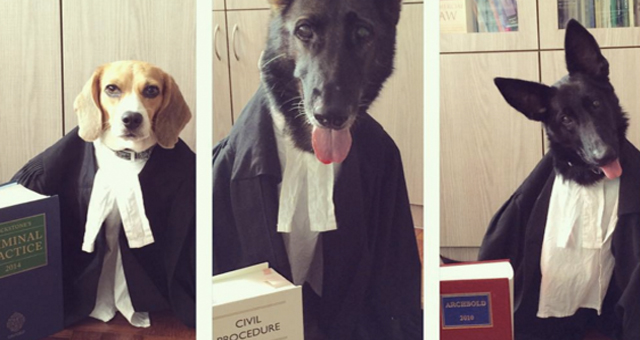
In Davis v United States, Willie Davis was stopped during a traffic stop and the police found an illegal weapon in the car. Davis requested a lawyer, one wasn’t provided, the interview continued and Davis made incriminating statements. The Supreme Court held that if a suspect’s request:

“is not an unambiguous or unequivocal request for counsel, the officers have no obligation to stop questioning him…[H]e must articulate his desire to have counsel present sufficiently clearly that a reasonable police officer in the circumstances would understand the statement to be a request for an attorney.”

The test is therefore whether a reasonable police officer in the circumstances would have understood the request.

The test of the reasonable person or, in this case, the reasonable police officer can always be manipulated. The Lousiana Supreme Court would probably be better legally placed if they had given no reasons at all instead of diving deep into a diatribe explaining the differences between “lawyer dog” and “lawyer dawg”. But perhaps Demesme should have more clearly articulated who he wanted as his lead counsel…get it? (I almost made it without a single terrible gag).

What if it had been a confession instead of a request? For example, if the accused had said “I touched that child dawg“. Would Louisiana have inserted the same ambiguity? “Well, I’m not sure what a “child-dog” is, so it’s not a confession”. That probably wouldn’t have been reasonable.

Slants and Pommiebashers – Trademarking Slurs in Australia and US

Early last week the US Patent and Trademark Office registered a trademark for a band called “The Slants” six years to the day after it was applied for.

The Asian-American band from Washington state attempted to trademark their name was refused on the basis that it was offensive. The Government argued that even though they have no right to limit private speech, registering a trademark is government speech so they can regulate their own speech within breaching the first amendment.

The Supreme Court in Matel v Tam unanimously decided along classic first amendment lines that even though the policy did not “play favorites”, limiting any speech was not permissible and that trademarks are an expression of private speech.

Our cases use the term “viewpoint” discrimination in a broad sense, and in that sense, the disparagement clause discriminates on the bases of “viewpoint.” To be sure, the clause evenhandedly prohibits disparagement of all groups. It applies equally to marks that damn Democrats and Republicans, capitalists and socialists, and those arrayed on both sides of every possible issue. It denies registration to any mark that is offensive to a substantial percentage of the members of any group. But in the sense relevant here, that is viewpoint discrimination: Giving offense is a viewpoint.

We have said time and again that “the public expression of ideas may not be prohibited merely because the ideas are themselves offensive to some of their hearers.” Street v. New York, 394 U. S. 576, 592 (1969). See also Texas v. Johnson, 491 U. S. 397, 414 (1989) (“If there is a bedrock principle underlying the First Amendment, it is that the government may not prohibit the expression of an idea simply because society finds the idea itself offensive or disagreeable”)

The decision makes it unlikely that other trademarks that may be considered “offensive” will not likely face the chopping block anytime soon; well-known recent examples such as the Washington Redskins.

Redskins


Australian Perspectives – Nucking Futs

Australian Intellectual Property law is not quite so lenient. There are the protections under s 18C of the Racial Discrimination Act 1975 (Cth) to make unlawful any act if:

(a)  the act is reasonably likely, in all the circumstances, to offend, insult, humiliate or intimidate another person or a group of people; and

(b)  the act is done because of the race, colour or national or ethnic origin of the other person or of some or all of the people in the group.

But as best as I could tell this has never been applied to prevent registration of a patent or trademark. Instead, we have s 42(a) of the Trade Marks Act 1995 (Cth), which states that a trademark application will be rejected if “the trade mark contains or consists of scandalous matter“. “Scandalous” is not defined in the act or the associated regulations.

The Australian Trade Marks Office will determine, on a case-by-case basis, guided by:

  • the actual words or images applied for;
  • the intended market for the relevant goods and services; and
  • the level of acceptance of the terms within the general population.

Overt imagery or words will be considered scandalous but mere suggestion will not be sufficient. Words or images that are too similar to offensive content will also be scandalous.

  • Nucking Futs = Acceptable
  • Pommiebasher = Acceptable
  • Farkoff = Acceptable
  • Cunce = Acceptable
  • Kunt = Unacceptable

Out of these three, “Pommiebasher” was the most controversial as the trademark office considered whether the term was a form of racial vilification. Eventually, they decided that the term was “ordinary and acceptable, if colourful and colloquial, language”.

It may surprise many to know that Australians have no explicit right to free speech. Scandalous may be a high threshold but it errs on the side of allowing speech (trademarks) that may be crude or in poor taste but stops short of anything that is a bit too far beyond the pale.

ACAT’s Missing Powers; Episode 6 – Return of the Enforcement Officer

In Episode 4 we dealt with the ACAT’s new civil jurisdictional limit whilst Episode 5 covered the inability to deal with a vindictive/tactical counterclaim. The ACAT’s legislative hamstringing does not stop there however and in episode 6 we face the difficulty of enforcing an order of ACAT once you are able to obtain one in your favour.

The enforcement process is notoriously difficult and cumbersome in any event. I often have conversations with clients that go something like “But I have a court order in my favour, why can’t we just get paid now?”, “It’s not that simple”. Some forms of orders are much simpler than others. A money order from the Supreme Court is much easier to enforce than say an order to vacate premises made by ACAT.

In a recent case, the ACAT determined that a man was not entitled to continue living in his deceased ex-wife’s house and duly made an order for his eviction. The Trustee for his wife’s estate attempted to execute the orders and could not directly enforce orders of the ACAT. So he registered the order in the Magistrates Court in an attempt to have the order enforced through those court processes. This is the normal course of enforcing ACAT orders as the Magistrates Court holds coercive powers that ACAT does not. The Magistrates Court could for example order an employer to re-direct wages or to seize bank accounts. Unfortunately, they and the ACAT, don’t have the power to make orders relating to the possession of real property (a house), and the Trustee was required to have his application transferred to the Supreme Court.

Finally, after a delay of many months, the Trustee was able to obtain a valid order to enforce the ACAT judgment. This was probably small consolation for someone who thought their legal struggle was finalised a long time before.

The judgment sums it up nicely:

13. Section 22 of the ACAT Act gives the ACAT, in relation to civil dispute applications, “the same jurisdiction and powers as the Magistrates Court has under the Magistrates Court Act 1930, Pt 4.2 (Civil jurisdiction).”  That jurisdiction is described in s 257 of that Act as jurisdiction to hear and decide “any personal action at law”, though, of course, with a monetary limit – $10 000 in the ACAT: s 18 of the ACAT Act; $250 000 in the Magistrates Court: s 257 of the Magistrates Court Act

34. Unfortunately, however, the Magistrates Court has, as noted above (at [29]), no jurisdiction to make an order for the recovery of possession of land.  See r 2440 of the Court Procedures Rules 2006 (ACT). Any such enforcement must to be undertaken in the Supreme Court.

37. It is not clear whether the Registrar was relying on the dispensing powers under r 6 of the Court Procedures Rules or relying on the provisions of r 6461 which permit informal service to be accepted as service for the purpose of Pt 6.8.

38. Because there was some doubt as to whether the order of the ACAT was directly enforceable by this Court, the Supreme Court Registrar also directed Mr Kaney to issue an Originating Application seeking an order for delivery of possession of the Property. No doubt the order of the ACAT would have been strong evidence in support of such an application.

To show the gaps in the implementation of the ACAT, I had to recently bring it to the attention of the  Justice Directorate that the Supreme Court didn’t even have a specific filing fee for the filing of orders for enforcement. We would have had to pay the full fee for commencing new proceedings (~$3000); a situation now rectified.

As a creature of statute, the ACAT was always going to have trouble with dealing with certain jurisdictions and enforcing certain orders. For example, practitioners will regularly blush at attempting to convince a Magistrate that they may hold the inherent powers of the Supreme Court when the Magistrates Court legislation is found to be lacking. But given that the ACAT enabling legislation was specifically crafted to give ACAT exclusive jurisdiction over residential tenancy disputes, one would think that it would be prudent to give them the power to actually make enforceable eviction orders.