
A Brief History of…Caveats

You’ll have to bear with me on this one and certainly forgive me because there is one long bow I draw within this exercise but now that I’ve given you my caveat lector it’s time to explore the origin of caveats.

The caveat in its most common legal usage exists as Caveat Emptor which literally translates into “buyer beware”. Caveats are most commonly used today as temporary warnings on real property and although they do not necessarily prevent the sale of any real property, good luck obtaining finance if there is a caveat in place, or finding a half-decent lawyer or realtor that feels comfortable telling you to go ahead with the purchase without holding comprehensive professional liability insurance.

Less common usages are Caveat Lector (Reader Beware”…you’ve been warned), Caveat Venditor (“Seller Beware”) and Cavere ab aliquo, which is definitely out of use but old judgments will still turn out this gem as a verb for “making yourself secure” or to secure bail or a surety.

Cavea first appeared as Latin for “hollow” or “cave”. The obvious evolutions of this are “cavern”, “cavity”, “excavate” and even “grave” as a type of hollow opening. Later the Latins and Romans used it specifically for “eye sockets” and your “palate” and as a root for “theatre seats” (No Idea! Maybe a small opening for an individual in a crowd?!), as well as “birdcage” and “beehive”.

As a side note Cumulus, from the same root, in early Latin was a swelling, heap or opening that built on itself, such as a series of caves, which gives us today the French, became old English origin of “cumulative”. As in “Does your Honour intend to impose the sentences concurrently or cumulatively?”.

Old Norman gaiole, from French jaole, from Latin gabiola, from Late Latin caveola from Early Latin cavea…gives us….“gaol” or “jail” both originating from this word originally meaning an opening. At some stage, or maybe always, an opening included an opening you could be trapped or contained in (hence “birdcage” and “beehive” being literal translations for the Romans).

Further modern “cage” is a short leap from cavea becoming cagea in Old French.

Now this is where I make my jump. At some stage we know that a Caveat evolved to mean a warning, cavea existed as the accusative verb of caveas, which could be to accuse one of being hollow or attempting to trap.

Therefore a Caveat Emptor might also be read as “the buyer should beware of being trapped”.

This may not necessarily help you in practice, but when you come across a Caveat or are imposing one remember that it exists as a temporary warning to a party not to be trapped into something that already exists, like an outstanding liability, personal guarantee, a bankrupt estate or for the sake of neat endings: an actual cave. 
Masterful Name Change

Trap for young players…

On 7 April 2015, the Courts Legislation Amendment Act 2015 was notified meaning that amongst a number of other changes from 21 April, the “Master” is retitled as “Associate Judge” in the ACT Supreme Court.

Mostly a practicality, this move recognises the nature of the role of the Master and how the differences between the expertise of the Master and the Judges has all but eroded, and reading the judgments of the Master, you’d be hard pressed to tell the difference. The change in title follows a recent trend of similar changes in Canada and Victoria.

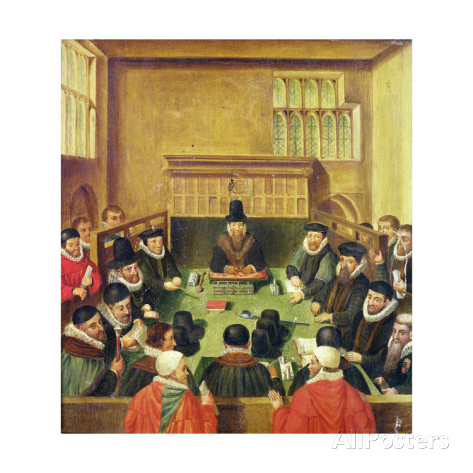
Masters, or Benchers (Masters of the Bench) is a position that dates back to at least the 12th century courts of England. The Master traditionally handled procedural matters and can be found in most Common Law jurisdictions around the world. In Australia, the role was utilised to cut down on the workload of Judges and were given jurisdiction over simpler civil matters. Eventually the simpler aspect was cut out and Masters became civil specialists.

The full title “Associate Judge” is required but “Your Honour” will suffice as usual. Whilst I’m at it the applicable abbreviation is now “AsJ”.

I completely appreciate that “Marvellous Master Mossop” rolls off the tongue in a touch of alliteration that would make Dr Suess chortle, but “Associate Judge” is the new nomenclature and young players would do well to remember it.

Practitioners have proven slow to acknowledge the new title in practice. Even Registrars still stumble over the new title, often reverting back to the old title and in the past month I’ve seen a decent handful of consent orders, submissions and whatever else that still refer to the Associate Judge as the Master. Learned habits are hard to forget and the old dogs who have said and written Master for the last 30 years will have a hard time adapting. Law, like most worthwhile endeavours, depends largely on the power to adapt. In this case it won’t be fatal if you use the wrong title, but you will still look like a tit and frankly why risk offending a judicial officer…ever.

The only other major change that practitioners will need to be mindful of is the from now on appeals from the Associate Judge will need to go before the Court of Appeal, no longer a single Judge. A great move for efficiency that will no doubt be well received in the Territory.

So youngsters, avoid the trap, and repeat “the Associate Judge’s Associate associates with Judge’s Associates” in the mirror until your tongue turns blue.

A Brief History of…Subpoenas

Subpoenas are commonplace in litigation in most courts around the world, particularly in common law and continental law systems.

They perform a vital function and the value of subpoenas is best realised by those who do not have access to them. Try summoning a powerful person before the courts in a country without the rule of law and you will quickly see that, despite our system’s flaws, money or political clout is not as powerful in Australia as it is in most parts of the world, thanks largely to the subpoena. The writ of subpoena is used generally as “Subpoena Duces Tecum” for the production of documents or a “Subpoena ad Testificandum” for the production of the individual to provide evidence or testify.

But where did it all start? Well, lend me your ears (eyes), like all the best parts of the law (and frankly everything) subpoenas have their origins in ancient Rome and Hellenic or Latin culture generally. The Romans placed great weight on the rule of law. Since the founding of the city, Rome was heavily divided between the rich and poor, the poor workers became vital to the success of the city and agitated for law to apply equally to all citizens under threat of taking their in-demand labour to another city which would essentially facilitate the failure of Rome in it’s upstart days. SPQR (The Senate and the People of Rome) recognised the need for placating the masses and edited the laws of Rome to apply equally to all citizens rich and poor, emphasis on citizens.* A citizen with a grievance could approach the local Magistrate (another survived Roman term) who would then issue a subpoena for the required person to appear before the Magistrate or Senate for the case to be heard.

In an early incarnation of mandatory minimum sentencing there were only two offences that automatically attracted the death penalty, treason and failing to answer a subpoena. Subpoenas as a tool of justice were considered so important that failing to answer it was a most egregious violation of civic duty. A person accused of murder may or may not be guilty, but if a person refused to answer a subpoena then they were seen as denying Jupiter’s justice itself. Hence the etymology of subpoena, “sub” meaning under and “poena” meaning penalty…a subpoena was an order of the court, under penalty…of death.

Like most principles of Roman law, the subpoena, along with habeas corpus, affidavits and pro bono (I’m sure there will be entries about those at some point) survived the collapse of the empire and were incorporated into most legal systems in Europe, largely through the Church, being the successor to the Roman Empire. The beautiful simplicity and practicality as a tool of the justice system ensured the subpoena’s survivability.

A great tale that demonstrates the ongoing importance of the subpoena involves William the Cow Thief from 1221 England. William was accused (by his wife…poor sod), of having stolen, killed and eaten a cow belonging to another man. During this period of England’s history, livestock and crops were the literal lifeblood of 95% of English society. William claimed that his Lord had gifted the cow in return for services. The Court issued a subpoena for the Lord to appear. He refused and was subsequently gaoled whilst William was set free because the Courts could not remove a man’s liberty who possibly had a defence that was unable to be tested before his peers. Interestingly, the Lord would have been unable to be tried for the theft of the cow, as it was technically his, but failing to answer a subpoena was a crime applicable to all men…who weren’t kings. It is hard to say whether the same fervour would have been used in later years a little further in time from the Magna Carta, but I digress.

Even if Registrar’s do not hold the power to have someone put to death for failing to answer them, subpoenas (only seppos say subpoenae) continue to hold a vital importance in today’s system by facilitating the production of evidence needed to prove a particular case and essentially facilitate justice.


For a much more comprehensive history of Rome, please see the phenomenal podcast of Mike Duncan http://thehistoryofrome.typepad.com/
and for a much much better history of subpoenas, read a book, particularly “Subpoena Law and Practice in Australia” by Gerard Carter. http://catalogue.nla.gov.au/Record/2847417.

*unfortunately as with most legal systems, the lofty ideals were often corrupted by money, but nonetheless a nice idea.