In a widely reported case, the Victorian Supreme Court ruled that flatulence, in that instance, did not amount to workplace bullying.
There hasn’t been a new fart joke in 40 years and the wide coverage of this case has already led to a race to the bottom by everyone trying to provide legal analysis better suited to page 3 of the Sun with obvious and terrible dad jokes. It doesn’t feel right to pick such low hanging fruit, so I’m going to play this one straight.
In Hingst v Construction Engineering (Aust) Pty Ltd (No. 3) [2018] VSC 136, Mr Hingst sued his former employer for negligence causing a psychological injury. The negligence focused on a series of events that occurred at work including a number of incidents when his supervisor would deliberately break wind near him. Mr Hingst sought $1.8 million. Workplace bullying, and bullying in general, is amorphous and can range from blatant to innocuous. It brings to mind Justice Stewart’s words who was struggling with an inclusive definition of pornography; “I can’t define pornography, but I know it when I see it“. Fortunately, the Courts have a bit more guidance when it comes to workplace bullying. From the judgment:
9 There is no statutory definition of what constitutes bullying in the workplace. A useful working definition, however, can be found in the reasons for judgment of Osborn JA (with whom Harper JA and Macaulay JA agreed) in Brown v Maurice Blackburn Cashman.[9] His Honour quoted WorkSafe Victoria’s guidance note on Prevention of Bullying and Violence dated February 2003 as follows:
Workplace bullying is repeated, unreasonable behaviour directed toward an employee, or group of employees, that creates a risk to health and safety.
Within this definition:
Unreasonable behaviour means behaviour that a reasonable person, having regard to all the circumstances would expect to victimise, humiliate, undermine or threaten.
Behaviour includes actions of individuals or a group, and may involve using a system of work as a means of victimising, humiliating, undermining or threatening.
Risk to health and safety includes a risk to the mental or physical health of the employee.[10]
Osborn JA went on to observe that this definition raises two threshold questions:
(i) was there unreasonable behaviour directed towards [the plaintiff], ie behaviour that a reasonable person having regard to all the circumstances would expect to victimise, humiliate, undermine or threaten a person; and
(ii) if there was, did it occur repeatedly?
Mr Hingst was found to have played along at the time by giving his supervisor the nickname of “Mr Stinky” and sprayed him with deodorant on another occasion.
The Court concluded that if there was a psychological history it was likely caused by Mr Hingst’s dismissal and not the outlined incidents.
The inference is that a reasonable person would not find this conduct to be victimising, humiliating or threatening. It has been left out of most of the reporting for convenience, but each instance will be treated uniquely and this conduct would very likely be considered bullying in future cases.
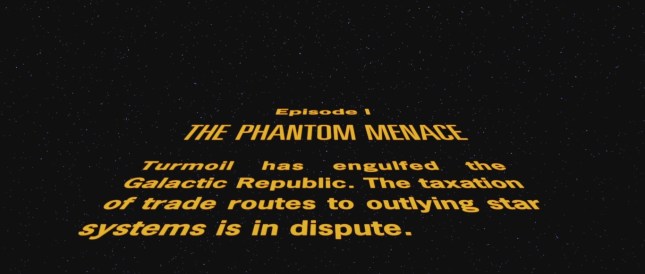
Many of us grew up on the original ACAT trilogy and may view these new episodes as somewhat of a hollow imitation. But the future waits for no one, time and tide, the young will eat the old, whatever the expression is that means I’m going to do it anyway, so buckle up.
By virtue of the ACAT Act, ACAT has first jurisdiction in many matters including disputes under $25,000, residential tenancy disputes, fencing and boundary disputes, administrative review, energy and water and mental health assessments. Importantly, for reasons we will shortly discuss, first jurisdiction does not equal exclusive jurisdiction. The enacting legislation for the ACAT purported to set up a system that diverted a large proportion of matters, mostly minor and administrative matters out of the court system and into a specialist jurisdiction.
A recent decision out of the High Court has established some pretty strict limitations on the purported jurisdiction of tribunals all over Australia. Essentially, that jurisdiction ends at the border, regardless of what the enacting legislation purports to do.
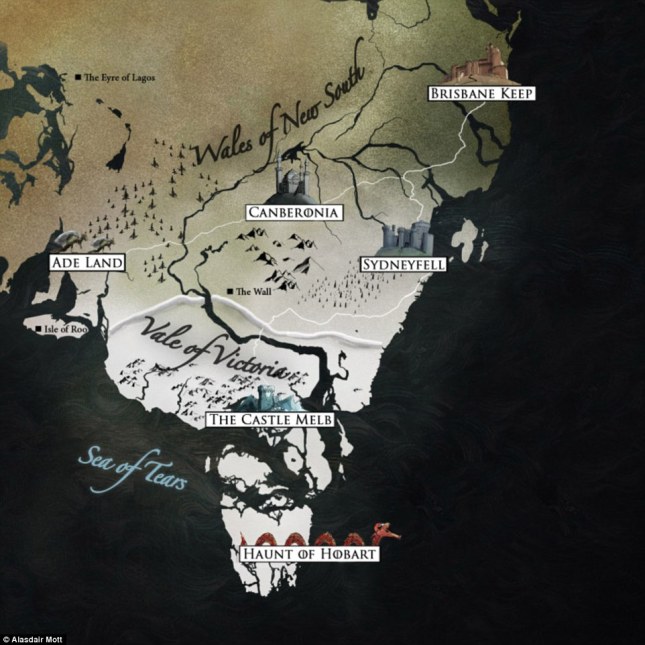
Recently in Burns v Corbett [2018] HCA 15 the High Court held that New South Wales’ civil and administrative tribunal, the NCAT, cannot purport to exercise jurisdiction over residents of other states or territories. The Burns decision effectively confirms Canberra’s status as a powerful city-state only.
Kiefel CJ, Bell and Keane JJ in the majority opinion:
The first issue in these appeals is whether the Commonwealth Constitution precludes the Parliament of a State from conferring jurisdiction in respect of a matter between residents of different States within s 75(iv) of the Constitution on a tribunal which is not one of the “courts of the States” referred to in s 77 (“the Implication Issue”). If that issue were to be resolved in the negative, the further issue would arise as to whether a State law which purports to confer jurisdiction on such a tribunal in respect of such a matter is rendered inoperative by virtue of s 109 of the Constitution on the basis that it is inconsistent with s 39 of the Judiciary Act 1903 (Cth) (“the Judiciary Act“) (“the Inconsistency Issue”).
The Implication Issue should be resolved in the affirmative. Considerations of constitutional text, structure and purpose compel the conclusion that a State law that purports to confer jurisdiction with respect to any of the matters listed in ss 75 and 76 of the Constitution on a tribunal that is not one of the courts of the States is inconsistent with Ch III of the Constitution, and is, therefore, invalid.
The High Court’s reasoning appears to only apply to natural persons and not corporations (Australasian Temperance and General Mutual Life Assurance Society Limited v Howe (1922) 31 CLR 290).
Howe’s Case and several others have affirmed that the reference in s75(iv) to ‘resident’ is a reference only to natural persons. The ‘great dissenter’, Justice Kirby predicted in 2003 that the narrow definition of natural persons would be proven restrictive over time. In British American Tobacco Australia Ltd v Western Australia (2003) 217 CLR 30, 72–3 [109]–[110] Kirby J wrote:
The decisions establishing that principle involved a remarkable narrowing of the constitutional language. In my view, it is a narrowing unjustified by the text or the context. In many ways it is reminiscent of judicial holdings in Australia and elsewhere at the same time to the effect that a ‘‘person’’, when referred to in legislation (for example for the purpose of admission to professional practice) did not include a woman. The only justification for such a narrow interpretation of s 75(iv) of the Constitution was the expressed judicial fear about an extension of the jurisdiction of this Court that might result in an inundation of work that this Court could not easily deflect to other courts in the views then held concerning the obligation of this Court to discharge a jurisdiction conferred on it by the Constitution.
…
In a proper case, this Court should reconsider the early determination that corporations, including statutory corporations, cannot be ‘‘residents’’ of a different State for the purposes of s 75(iv) of the Constitution. Self-evidently, corporations are, and were at the time when the Constitution was made, legal persons. They were then, and still are, frequent litigants in the courts. Their existence was contemplated by the Constitution itself. Although in 1985 in Crouch v Commissioner for Railways (Q) this Court declined to reopen its early holding on the meaning of s 75(iv), the decision is open to the strongest doubt and criticism. In my view it is wrong. One day this Court will say so.
Earlier Limitations
Other jurisdictional limits have already been addressed: for example, VCAT had earlier ruled against their own jurisdiction in relation to serving process in foreign countries. In Gluyas v Google Inc [2010] VCAT 540, an Australian sought to bring an action against Google for not taking down an autism hate-blog based out of the United States. VCAT dismissed the application for other reasons but did note specifically that VCAT had no powers to effect process outside of Australia. Regardless of how well the legislation is written, it is likely the same situation here.
Solutions
Victoria presents one interesting solution to the problem. There is a little-known provision in Victoria whereby proceedings can be issued in both a Court and VCAT. The President of VCAT is a Supreme Court Judge and Vice Presidents of VCAT are County Court Judges, so there are already judges who sit in both jurisdictions. Their legislation allows for special appointments whereby a Judge could continue hearing a VCAT case, out of the jurisdiction, and also wear the hat of a Judge.
The ACT position of jumping jurisdictions is somewhat more complicated.
Any party anywhere, international or interstate, can still consent to the jurisdiction. However, it appears that the only feasible solution for someone looking to bring an action in the ACT, where one party is interstate, is to bring the action in the ACT Supreme Court. The situation does get complicated though, despite the Supreme Court clearly holding inherent jurisdiction over any ACAT dispute, there is no ability to transfer proceedings. An ACAT dispute can have a question referred to the Supreme Court (s84) and an ACAT decision can be appealed to the Supreme Court (s86). But the Supreme Court would likely have to dismiss the proceedings on the basis that the original process was deficient for lack of jurisdiction.
Filing a matter in the ACAT for a natural person costs $338, filing in the Supreme Court costs $1,669. There is no specialist fee for ACAT referrals or for matters that cannot be started in the ACAT because of this deficiency.
For example, if you have a $2,000 bond, your landlord has unjustly kept it, but your landlord is based in Sydney, then you have no option but to file in the Supreme Court for $1,669.
The good news is that if you are in the right, rule 1722 would mean you are entitled to 100% of costs, as opposed to the ACAT presumption of 0% costs. Of course, if you are incorrect, then a simple bond dispute could lead to thousands of dollars of costs if, as a punter, you happen to get the law wrong.
The ACT is particularly susceptible to this problem given the size of the Territory and the increased likelihood that parties to transactions will be based in NSW or further afield. Essentially, the stakes are hugely raised the second you step into the Supreme Court jurisdiction, which is entirely against the original purpose of the ACAT.
This is a matter for the legislature but if I may, I humbly propose three solutions:
Create a low-cost filing fee with a presumption for no costs in the ACT Supreme Court to catch those cases that cannot find jurisdiction or where consent jurisdiction is lacking – this one is possibly as simple as allowing for the rules or even a practice direction to state that upon application the Court will apply the rules and practices of the ACAT (+the fee/costs structure);
Amend the ACAT structure to have Supreme Court judges appointed as Presidential Members to create a new field of “two-hat” law, previously not in existence in the ACT (but at least Victoria has precedence to assist);
Two Words: Singular Jurisdiction. Abolish the ACAT. Abolish the Magistrates Court. Everything is the Supreme Court only. We would have singular rules and simply have different levels of judicial officers hearing cases. Members can sit as Registrars when needed, Judges can sit as Magistrates on bail decisions etc. In a jurisdiction our size, there are great advantages to this approach. Massive administrative savings would be realised and the same rules can remain in place to dictate which officer should deal with each case and handle the appropriate costs positions and so on.
Point number 3 requires its own post, but if you catch me at the pub and have a spare hour or two I’ll do my best to convince you of the benefits of a sole jurisdiction. By the way, we will shortly have a big shiny new Court precinct building that would serve a single destination well, but I’ll also be the first to admit that this is a bit of a pipe dream…for now.
The High Court decision in Burns has huge implications for a jurisdiction the size of the ACT and once again I find myself writing about the ACAT facing difficult foundational issues that have existed since inception but are one-by-one coming to the fore, with real implications for those with cause to seek ACAT’s intervention.
Politicians blather on from time to time around the world about their anti-abortion credentials, but this is most notably either a US phenomenon or a brief part of Abbott’s leadership gambit opus “Battlelines”.
Abortion is obviously not the same third-rail issue in Australia as it is in other parts of the world. In the Australian context, apart from the fringes, the most restrictive you will usually see a politician go is maybe arguing that abortions should be “legal, safe and rare” or that they should be part of a range of options with abortion as the last resort. But it is rarely part of the serious debate in Australia as to whether it should be Medicare funded, allowed only in more limited circumstances (instances of rape) or whether we should roll back the inclusion of RU486 on the Australian Register of Therapeutic Goods.
Regardless of your personal stance, it is very important to remember that the changes in Australian law have all happened really recently and have certainly not always been the norm. Victoria legalised abortion in 2008, Tasmania in 2013 (de-criminalised). In Queensland and South Australia, it is still not legal but there are some reasonable exemptions to allow abortion in the right circumstances, though it does remain a criminal offence on the books in Queensland.
Abortion drug RU486 was included in 2012 on the Register of Therapeutic Goods and on the PBS in 2013.
Victoria and Tasmania have included provisions for anti-protest zones that created bubbles around abortion providers, preventing those areas being used by protestors to harass women seeking to access safe and legal healthcare opportunities. Similar legislation was passed in the ACT and we are just seeing the first prosecution under those laws, with the accused facing fines of up to $3750.
Anti-protest laws have a dicey interaction with our implied freedoms and the line has always been legally and politically unclear.
From on High
In 2013, the High Court upheld Adelaide City Council legislation that prevented street preachers from preaching, canvassing, haranguing or distributing printed material within the area of the City of Adelaide without a permit.
At this point, I should note for the uninitiated that Australia holds no right to freedom of speech. The most we have is an implied freedom of political expression.
In South Australia v City of Adelaide, the High Court determined that although the Adelaide City by-laws did cause a burden the implied right of political expression they did not to the extent that it actually impugned the right to political expression.
This is the same question that often causes us to examine the United States in bewilderment; it is the balance between freedoms and protections. The way the US freedom of speech provisions have been interpreted allow objectionable speech whether it be the Ku Klux Klan or the publishing of pornography, depending on your personal disposition. There are reasonable prohibitions, but nowhere near as prohibitive as in Europe or Australia.
The Poppelwell Case
Three Canberra men, part of a prayer group, have been charged with an offence under section 87 of the Health Act 1993 (ACT), which makes it illegal to engage in prohibited conduct in a protected area.
Protected area means within 50 metres of a declared medical facility, in this case, the ACT Health building on Moore Street.
Prohibited conduct is a bit trickier.
The act defines prohibited behaviour as including intimidation, harassment, threats, capturing images and protest, amongst other prescribed behaviours.
It is alleged that the three men were holding a silent vigil and praying within the prohibited area and that this was a protest. This vigil involved sitting and walking only. The prosecutors relied also on tendency evidence to claim that the men were engaged in the protest despite any sort of “who, me?” position the men adopt. It is alleged that the men stood vigil, often with signs, at the main entrance every Friday for many years.
The case will likely be determined in the Magistrates Court by a determination of whether there was a protest or whether the law is compatible with the ACT Human Rights Act 2004. Likely, and I’m guessing here, sections 14-16 covering freedom of religion, freedom of assembly and freedom of expression.
Regardless of what happens in the Magistrates Court, there will no doubt be an appeal to the Supreme Court and likely the High Court to determine whether the Section prohibiting protest is inconsistent with the implied right to political speech.
The Director of Public Prosecutions gives the impression that he is hesitant to bring the prosecutions out of regard for the public interest test, but choosing to never enforce the law once it is on the books is not really an option, so it was inevitable that it was going to be tested and challenged constitutionally eventually.
The decision will be handed down on 9 March 2018.
In my humble…
I’m glad of the fact and believe that we are stronger for not having the same divisive discussion on abortion that many other countries have.
Further to this, I’m glad that we don’t have the absolutist approach to public speech that the US has. There must necessarily be reasonable restrictions on most public acts.
However, the ACT law is problematic. People retain the right to express their opinions provided they are a certain distance from the providers of legal abortions. It operates as if there is no danger from people expressing these views provided they are in a certain geographical proximity, it claims that these acts of protest are equivalent to dangerous speech as opposed to valid political expression and it claims that the people conducting this form of speech are a problem that requires a unique distinction under the law.
It’s likely that we’ve gone too far in the inclusion of protests as prohibited action. Aggressive and vile acts of protest can definitely be used as a form of intimidation, but these acts are covered by the other definitions of the Act such as harassing, intimidating or threatening behaviour. To include protest, as its own category, probably tips the scale too far on the protection/freedom continuum and therefore risks a backlash, defeating the purpose of the legislation. If the stronghanded action instead leads to the validation or politicisation of acts of protest near medical clinics, then it has failed. My problem isn’t with what the three men did or didn’t do, my problem is with the wording of the law and whatever the next step is that we haven’t foreseen. In the arms of the wrong government, these laws enforce the precedence that can lead to protest being banned in other circumstances such as gagging environmental protestors outside of cage-egg farms or preventing protests outside of parliament or other objectionable gatherings.
UPDATE: On 9 March 2018, Magistrate Theakston found each offence not proven and dismissed the charges which relied heavily on tendency evidence to show that the defendants must be engaged in a protest because of their previous behaviour.
Magistrate Theakston stated:
85. I accept they were each engaged in silent prayer, and that such prayer involved no component of expression, communication or message to those around them. The only reservation I have in that regard, arises from the presence of the rosary beads in the hands of Mr Clancy. However, the presence of those rosary beads, without any other symbolic display or gesture, leaves me with a significant doubt about whether there was any expression, communication or message by Mr Clancy.