Possible High Court showdown over Barbaro

A full bench Federal Court has set the stage for a showdown over whether regulatory or disciplinary bodies can submit on the appropriateness of a particular sentence.

In Barbaro v The Queen [2014] HCA 2 the Court reached the view that in criminal proceedings the prosecution should not nominate the specific sentencing result or the range within which it should fall.

Whilst binding on criminal proceedings, it was a point of contention whether this applied to quasi-criminal proceedings such as disciplinary or administrative matters. Director, Fair Work Building Industry Inspectorate v Construction, Forestry, Mining and Energy Union [2015] FCAFC 59, or as the much less clunky “the CFMEU case” found that many matters are often mistakenly classified as “civil”, because it is apparent they are not “criminal”.

The Court found that in reality, civil should be viewed as proceedings between private parties and any matters involving the state were bound by similar procedural rules. Citing Legal Services Commissioner v Nomikos [2014] VCAT 305 with approval:

‘Pecuniary penalties are sought by the State against its citizens, acting in and on behalf of the public interest (rather than as a litigant in its own interests). In investigating conduct that can result in a pecuniary penalty, State enforcement bodies are armed with intrusive investigative powers to identify and establish breach.  For the enforcement bodies in question, those powers are the same as, or may in some ways be more profound than, the powers they use in criminal investigations.

The various deals that are often struck between defendants and disciplinary bodies such as ASIC, ATO, AFMA, Legal Services Commissioner etc. are in fact a matter for the Court and it is inappropriate for a state body to comment on the appropriate penalty.

There are converse public policy considerations that point to the benefit of regulatory bodies being able to save time and money by facilitating cheap pleas of guilty, with a real benefit for the defendant, but the obvious flip side is that the Legislature have in fact already accounted for discounts for early pleas and other such items.

In a trifecta for Victoria, CFMEU relies on the Barbaro HC decision in contradiction of Matthew’s v R [2014] VSCA 291 in relation to non-criminal submissions.

It appears inevitable that the decision will go to the High Court and regulators and disciplinarians should be well aware of the possible implications.

“Without Prejudice”

‘Without Prejudice’ offers are a vital part of litigation in the Territory and indeed throughout most of the Common Law world. In Simaan General Contracting Co v Pilkington Glass Ltd [1987] 1 All ER 345, Judge John Newey QC at 347, dealing with the question of without prejudice communication, said:

It is public policy to encourage litigants to settle their differences and, since they are most unlikely to negotiate satisfactorily if every word which they utter and every offer which they make can be quoted against them later, the general rule has long been that nothing which is written or said ‘without prejudice’ can be referred to in Court subsequently without the consent of all parties concerned.

‘Without Prejudice’ is a form of privilege claimed to essentially allow practitioners to discuss issues openly and for those discussions, whether written or oral, to be considered ‘without prejudice to the maker of the statement’. The history of ‘Without Prejudice’ has interesting origins and seems to have originally been adopted on the basis that the evidence relating to these types of discussions or correspondence hold minimal evidential value rather then the current view relating largely to public policy.

It is unclear from my readings whether the principles of “Salvis Juribus” were common in the ancient world, but the principle of comments being considered ‘Without Prejudice’ certainly came into popular use following the reformation, essentially allowing the largely academic discussion of ideas which could be considered revolutionary or heretical without bringing the maker of the comments under the wrath of the Church or State.

‘Without Prejudice’ is provided for three-fold in the Territory. The common law protections which exist were essentially codified under s131(1) of the Evidence Act 2011, which states that any communication between any of the parties to a dispute that occurs during the negotiation, or any document prepared in connection with the negotiation cannot be adduced as evidence in Court. Additionally, r 1006 of the Courts Procedures Rules 2006 provides essentially the same protections but also more specifically rules out references to such material.

‘Without Prejudice’ refers to the privilege that attaches to written or verbal statements made by a party to a dispute in a genuine attempt to settle that dispute. However ‘Without Prejudice’ is not an indiscriminate shield that can be used to protect material that would otherwise be admissible, and documents which make a demand or seek to assert rights will not generally be covered by the privilege.

It is not vital to include the words ‘Without Prejudice’ to establish this privilege and the courts will consider the inferred intention of the parties as opposed to the actual use of the words. Conversely, the inclusion of the words when the material is not indeed covered by the privilege can incur an adverse costs order. However, to avoid a potential argument in respect of the use of a document in Court, it is still recommended to clearly state the basis on which the offer is made. Additionally it is not vital to include the words on all subsequent correspondence provided they are part of the same ‘chain of correspondence’…but just include it to be sure.

‘Without Prejudice’ will generally not apply to letters of demand, correspondence for the purpose of finalising an agreement that is not a settlement or when litigation is not contemplated or the mere assertion of rights.

The privilege can apply only to parts of documents that are actually privileged and for this reason it is best to keep correspondence relating to settlement separate from other topics to ensure that the correspondence as a whole can have privilege applied to it.

For a discussion of Calderbank offers and “Without Prejudice Save as to Costs” check out the posts relating to Calderbank offers.

For a recent Territory decision, see the Master’s recent discussion for hints at the Supreme Court’s stance: Greenway v Teoh [2014] ACTSC 224 or read the case note on this site.

Alternatively McNicol’s Law of Privilege (1992) (around p480) or for a bit more flair Desiatnik Legal Professional Privilege in Australia.

Masterful Name Change

Trap for young players…

On 7 April 2015, the Courts Legislation Amendment Act 2015 was notified meaning that amongst a number of other changes from 21 April, the “Master” is retitled as “Associate Judge” in the ACT Supreme Court.

Mostly a practicality, this move recognises the nature of the role of the Master and how the differences between the expertise of the Master and the Judges has all but eroded, and reading the judgments of the Master, you’d be hard pressed to tell the difference. The change in title follows a recent trend of similar changes in Canada and Victoria.

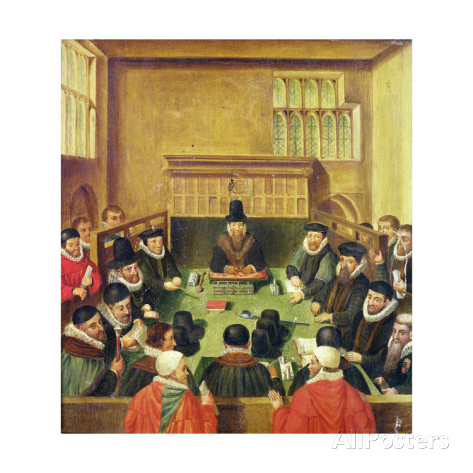
Masters, or Benchers (Masters of the Bench) is a position that dates back to at least the 12th century courts of England. The Master traditionally handled procedural matters and can be found in most Common Law jurisdictions around the world. In Australia, the role was utilised to cut down on the workload of Judges and were given jurisdiction over simpler civil matters. Eventually the simpler aspect was cut out and Masters became civil specialists.

The full title “Associate Judge” is required but “Your Honour” will suffice as usual. Whilst I’m at it the applicable abbreviation is now “AsJ”.

I completely appreciate that “Marvellous Master Mossop” rolls off the tongue in a touch of alliteration that would make Dr Suess chortle, but “Associate Judge” is the new nomenclature and young players would do well to remember it.

Practitioners have proven slow to acknowledge the new title in practice. Even Registrars still stumble over the new title, often reverting back to the old title and in the past month I’ve seen a decent handful of consent orders, submissions and whatever else that still refer to the Associate Judge as the Master. Learned habits are hard to forget and the old dogs who have said and written Master for the last 30 years will have a hard time adapting. Law, like most worthwhile endeavours, depends largely on the power to adapt. In this case it won’t be fatal if you use the wrong title, but you will still look like a tit and frankly why risk offending a judicial officer…ever.

The only other major change that practitioners will need to be mindful of is the from now on appeals from the Associate Judge will need to go before the Court of Appeal, no longer a single Judge. A great move for efficiency that will no doubt be well received in the Territory.

So youngsters, avoid the trap, and repeat “the Associate Judge’s Associate associates with Judge’s Associates” in the mirror until your tongue turns blue.