A Brief History of…Caveats

You’ll have to bear with me on this one and certainly forgive me because there is one long bow I draw within this exercise but now that I’ve given you my caveat lector it’s time to explore the origin of caveats.

The caveat in its most common legal usage exists as Caveat Emptor which literally translates into “buyer beware”. Caveats are most commonly used today as temporary warnings on real property and although they do not necessarily prevent the sale of any real property, good luck obtaining finance if there is a caveat in place, or finding a half-decent lawyer or realtor that feels comfortable telling you to go ahead with the purchase without holding comprehensive professional liability insurance.

Less common usages are Caveat Lector (Reader Beware”…you’ve been warned), Caveat Venditor (“Seller Beware”) and Cavere ab aliquo, which is definitely out of use but old judgments will still turn out this gem as a verb for “making yourself secure” or to secure bail or a surety.

Cavea first appeared as Latin for “hollow” or “cave”. The obvious evolutions of this are “cavern”, “cavity”, “excavate” and even “grave” as a type of hollow opening. Later the Latins and Romans used it specifically for “eye sockets” and your “palate” and as a root for “theatre seats” (No Idea! Maybe a small opening for an individual in a crowd?!), as well as “birdcage” and “beehive”.

As a side note Cumulus, from the same root, in early Latin was a swelling, heap or opening that built on itself, such as a series of caves, which gives us today the French, became old English origin of “cumulative”. As in “Does your Honour intend to impose the sentences concurrently or cumulatively?”.

Old Norman gaiole, from French jaole, from Latin gabiola, from Late Latin caveola from Early Latin cavea…gives us….“gaol” or “jail” both originating from this word originally meaning an opening. At some stage, or maybe always, an opening included an opening you could be trapped or contained in (hence “birdcage” and “beehive” being literal translations for the Romans).

Further modern “cage” is a short leap from cavea becoming cagea in Old French.

Now this is where I make my jump. At some stage we know that a Caveat evolved to mean a warning, cavea existed as the accusative verb of caveas, which could be to accuse one of being hollow or attempting to trap.

Therefore a Caveat Emptor might also be read as “the buyer should beware of being trapped”.

This may not necessarily help you in practice, but when you come across a Caveat or are imposing one remember that it exists as a temporary warning to a party not to be trapped into something that already exists, like an outstanding liability, personal guarantee, a bankrupt estate or for the sake of neat endings: an actual cave. 

The Slip Rule…or how I learned to stop worrying and love common sense

The recent decision of Brennand v Hartung handed down by the Supreme Court has a nice detailed analysis and history of Rule 6906, commonly known as the “Slip Rule”. 

The slip rule exists in most jurisdictions in various forms but essentially allows for the correction of orders or court certificates. In the ACT the correction can be made by application or on the court’s own initiative and practice allows for the correction to be made in chambers.

Whether or not a Court has the power to correct and effectively alter a final judgment in order to correct a mistake arises frequently and there is a common law power in addition to the rule. As stated by the High Court in Achurch v The Queen [2014], quoting Smith v New South Wales Bar Association:

“It has long been the common law that a court may review, correct or alter its judgment at any time until its order has been perfected” [17]

Although it has been pointed out in Norman v Norman (1992) 6 WAR 372 at 375 that the precise time when an order or judgment is perfected is not entirely clear.

An order is considered made under r 1605 once it is either formally recorded (in chambers or otherwise) or upon pronouncement (as soon as it is spoken by the judicial officer). In an ex tempore decision the formalisation of the order is left to the associate or registry. Keeping in mind that Judges or Magistrates may not always have a chance to confer prior to or after the making of the order, it is understandable that the recording of the order, or even the reasons, can be mis-recorded to an extent that ambiguity or error exists.

The decision in Brennard examined an order made by Master Harper ruling that “The statement of claim filed by the plaintiffs on 7 September 2012 be struck out.”  despite being filed on a separate date and the resulting order for costs incorrectly awarded to the plaintiff instead of the defendants as clearly intended.

Refshauge J concluded that the error was obvious and the defendants were entitled to the usual presumption of costs following the event, but questioned what to actually do about it. Having reviewed the transcript and helped by the fact the application was not opposed the Court found that as the order had been clearly expressed in court (therefore: made) it was amenable to apply the slip rule to correct the official orders as they were recorded.

There are other interesting applications of the rule particularly in relation to Bankruptcy proceedings, noting that bankruptcy rules are considered a harsh mistress to be applied even in situations that may not seem reasonable or fair. See for example Flint v Richard Busuttil for applying the slip rule to retrospectively extend the time for compliance with a creditors petition or Soil and Contracting Pty Ltd v Boban from W.A. for the equivalent in winding up applications.


If you require an order remade it is a simple enough process. An email to the Registry cc’ing in all parties, outlining the mistake and the proposed corrected version should be enough. Other parties will have a chance to comment this way and the registry can check the record or simply check with the judicial officer. The order can then be made in chambers, or if absolutely necessary listed at the officer’s convenience.

Canberra Disability Rights Legal Service

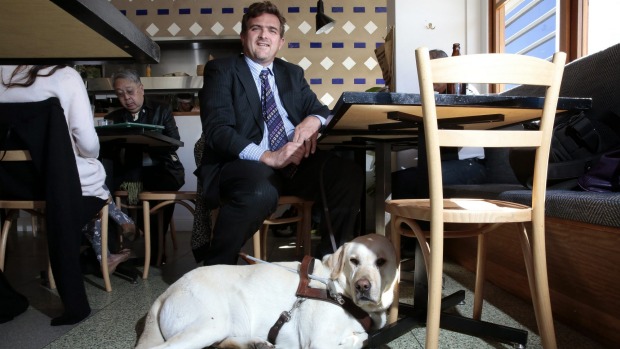
“Advocacy for Inclusion” launched the Disability Rights Legal Service on 18 June 2015.

One of the only of it’s kind in Australia, the service is seen as a natural extension of their advocacy work and aims to provide information for people with disabilities and advocacy through volunteer solicitors and partnerships with private providers.

The centre has named its priorities as addressing disproportionate representation in the prison system, high rates of child removal and restrictive guardianship orders.

The DRLC is located on University Avenue and are grateful for volunteer solicitors or civilians who can give up any amount of time to assist.

Read Chris Knaus’s article from the Canberra Times.