Uni Pub Development Hampered by Payments Dispute

Uni Pub has faced a legal challenge relating to the development of its ground level expansion into the next door premises.

A plumber working on the development has made a claim under s15 of the Building and Construction Industry (Security of Payments) Act 2009 (ACT) (SOP) alleging unpaid work of ~$195k out a total contract for $686k which included additional variations not part of the original contract and disputed by Uni Pub. The case is here.

The Payment Claim

Mr Gelonese, the director of VG Enterprises was a plumber employed by Uni Pub to perform the work for the expansion of Uni Pub on the ground level into Tamar House, located next door.

VG filed a claim in the Magistrates Court in Feb 2015 for ~$72k. (Next listed Jan 2016.) On application from VG and seperate from the Magistrates Court action, on 24 July 2015 an adjudicator accepted an appointment to determine a claim of ~$195k outstanding under the SOP. This amount appeared to include the ~$72k previously claimed. Importantly, under s 15, a claim under the SOP must relate only to work performed within the last 12 months.

The SOP came into effect in 2009 as a stop-gap protection to ensure that contractors could claim funds owed to them without resorting to the courts and the associated expenses. The 12-month limit exists to make sure that the function of the act as a rapid resort does not unfairly prejudice defendants from having to respond quickly to aged claims.

The adjudicator awarded the amount despite claims from Uni Pub that none or little work was performed within the preceding 12 months.

Judicial Review

Uni Pub applied to the Supreme Court seeking a determination that the adjudication was invalid on the basis of the 12-month bar. The question of the 12-month bar rested on whether VG could show that any work was completed following the termination of the contract.

Associate Judge Mossop heard evidence including from the site manager, Uni Pub management, Mr Gelonese and a quantity surveyor who assessed the value of the work performed following the termination.

Included in the evidence were unverified timesheets from the plumber detailing thousands of dollars of work which the Court found could not be relied upon with any accuracy and appeared to be prepared by Mr Gelonese’s wife but it was not made clear what primary data she was drawing on.

Importantly, there was nothing signed including the original work contract, though this was not in contention, nor the supposed variation to the contract which brought about the additional amounts. Evidence that the contract was terminated orally in May 2014 was not objected to by the Defendant’s solicitors despite clearly being hearsay. It was the evidence of Uni Pub that no employees of the defendant attended the site after termination.

Uni Pub hired a quantity surveyor to assess the remaining work to allow them hire a new plumber for the remaining $86k worth of work. A second report by the surveyor concluded that approximately $3,500 of work was performed since the termination that could not be attributed to the new plumber.

Finding

The quantity surveyors evidence was key and appeared to corroborate that version of events given by Uni Pub. The assessment that there was $3,500 unaccounted for work also appears to mesh with the statements made by VG that his staff did attend the site and perform some work without coordinating with Uni Pub, though the $3,500 is well short of the claimed $195k.

Mossop AsJ found that little or no work was performed since the termination in May ’14 meaning that the claimed amounts of the arbitration were not performed within the last 12 months and therefore the arbitrator had no jurisdiction to make a decision.

This effectively kills the claim and although there is still the Magistrates Court claim on foot, I’m sure that Mossop AsJ’s reasons will be closely considered by the parties when determining the most effective course of action (i.e. dropping it, with an agreement as to costs).

In its reasons, the Court noted that the plumber was as generic as possible in giving his responses and could not point to any particular work, instead identifying “just general works” which is highly unusual for such a large claim. Most professions can usually point to some sort of concrete accomplishment in exchange for $195k, but I would be willing to accept that challenge.

Comment

There were a few quirks with this matter that seemed to paint the plumber as heaps a little dodgy. Included in the evidence from VG was part of a conversation he secretly recorded when he showed up at a Uni Pub manager’s house unannounced asking him to sign invoices and quizzing him about the remaining payments. One might assume that the tendering of only part of a conversation recorded without the knowledge of a person would usually imply editing, seeing as it is pretty difficult to selectively record without the subject noticing (though I’ve never tried, ok once, but it didn’t end well). Unlike NSW, the ACT has not explicitly created an offence for secretly recording a conversation and also it is unclear whether tendering as evidence would count and publication.
(See s 11, Surveillance Devices Act (NSW))

VG appeared pretty lucky to get off without a harsher finding. Mossop AsJ was linguistically lenient with his characterisation of the evidence of VG; generously “preferring” the evidence that “suggested” that the timesheets did not “accurately record the time”. sigh.

Calling a Lawyer Dennis Denuto is Not Defamatory

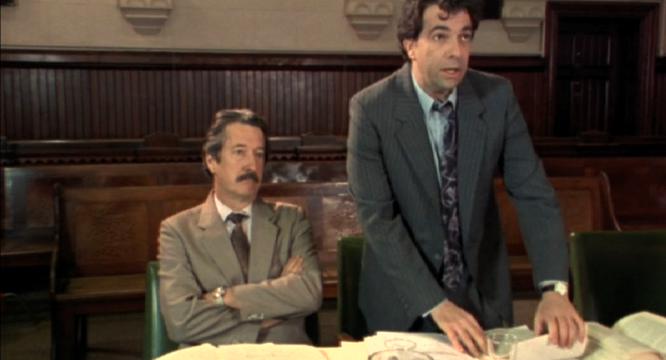
Every Lawyer has at some stage been mocked by being called “Rake”, “Lionel Hutz” or the ever favourite “Dennis Denuto”.

I personally prefer the more obscure “My Cousin Vinny” or “Bizarro Atticus“. Either way, just about every lawyer cops benign banter and just has to smile sweetly and suppress retaliating against their career-challenged antagoniser.

anigif_enhanced-16628-1390976119-17.gif

Perhaps Queensland lawyer Brett Smith had simply heard the jibe one too many times in his life and after being called “Dennis Denuto” and a deluge of other names in open court, Mr Smith launched a defamation action against the party who saw fit to mock him so brazenly.

Brett Smith was appearing in a Family Law matter for his daughter-in-law, and the former partner of his daughter (the respondent in the family proceedings). The ex-partner referred to Mr Smith as “Dennis Denuto from Ipswich” in Court and in emails which led to Mr Smith claiming $250,000 in damages and an apology.

In defending the defamation the solicitors had more fun at Mr Smith’s expense and took every convenience to refer to Brett Smith as the “BS lawyer” from his “BS practice” with his “BS website” . As someone with BS initials, this is a pain I know all too well.

A range of defences were deployed including “truth”, “the vibe” and that it was actually a favourable comparison because DD was eventually victorious in the High Court.

anigif_enhanced-32068-1390980461-13

The Queensland District Court passed up the opportunity to join the frivolity and dismissed the action on the basis of triviality under s33 of the Defamation Act 2005 (Qld). Going further to find that Mr Smith had in fact “called in an airstrike on his own position” [52] by fighting the imputation and unwittingly conjuring the Barbara Streisand effect. The BS effect is a well-known internet phenomenon  whereby the action of trying to prevent a negative thing from getting attention leads to the thing getting attention more than it would have otherwise.

In Mr Smith’s case the insults got international news coverage following his filing and importantly you’re now reading about it as well, whereas chances are that none of us would have heard of the jibes if Mr Smith had just rolled his eyes.

Equality -vs- Liberty. High Court Backs Equality.

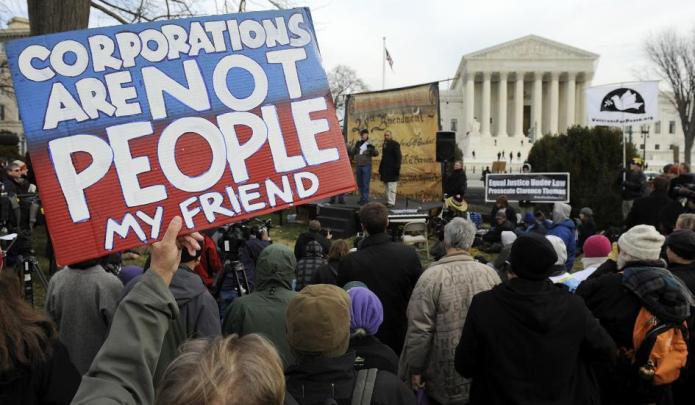
The High Court has given an ideological thumbing to our US cousins over whether there is a right to limit the influence of money in politics by upholding the ability to limit certain kinds of influence and participation. The decision stands in stark contrast to the US Supreme Court decision in Citizens United which opened the literal (not literal) flood gates to corporate money in political campaigning.

Citizens United

Citizens United v. Federal Election Commission (insert non-sensical US case citation here) involved answering 2 questions. Firstly, did the Federal Election Committee (FEC) limitations on donations from entities that were not individuals breach the first amendment right to free speech and secondly did restrictions on advertising regarding the film “Hillary” breach the first amendment?

Yes, No.

Citizens United can best be described as a right-wing attack special interest group that sought to advertise a film that was highly critical of Hillary Clinton and ran into resistance from the FEC who banned the efforts on the basis that they breached the Bipartisan Campaign Reform Act (BRCA). The BCRA was passed in 2002 and amended the Federal Election Campaign Act by targeting soft money and its influence in campaigns and political advertising. The act was praised as a rare achievement in campaign reform which has only increased the ire following the Supreme Court decision. Subsequently, the decision has become a HUGE hot button issue as the US starts the bizarre circus that is their Presidential Election process.

First Amendment to the Constitution of the United States of America:

Congress shall make no law respecting an establishment of religion, or prohibiting the free exercise thereof; or abridging the freedom of speech, or of the press; or the right of the people peaceably to assemble, and to petition the Government for a redress of grievances.

To paraphrase the judgment, the US Supreme Court essentially stated that all legal persons, such as corporations and trade unions, not just actual people have equal protection under the first amendment to not have their right to free speech impeded by an act of Congress. Practically this means that “mo money = mo free speech”, and no law can prevent an entity spending its money in this vein.

On the second question, the Court found that the FEC could still validly regulate the content of those advertisements and that preventing the “film” “Hillary” from being used in political advertisements did not violate Citizens United’s first amendment rights.

Equality v Liberty

The Court divided almost perfectly on ideological lines, with Chief Justice Roberts providing the deciding vote in both of the 5-4 decisions, which in itself is worth an article on how we should thank Lady Fortuna that our justice system is nowhere near as political as the US. Voting for sheriffs and judges? mmm, no.

The decision is disappointing but hardly surprising given the current climate of US politics and also the general history of the country right back to its foundations.

For the uninitiated, let me summarise western political/organisational foundations in 50 words or less. European structures tend to favour equality and community rights over individual rights. So your right to say whatever you want is restricted by the right of the community not to hear your racist rant on a bus or your right to keep your entire income is overridden by the right of the community to have a public police force, health system, defence force etc. Alternatively, the US system tends to favour individual rights, where community rights are still apparent but in a much more limited understanding. So your right to say what you what is more or less absolute over someone being offended by your retarded ramblings and your right to religious expression is complete even if it is expressed as part of a “profoundly evil movement from which gullible – and the not so gullible – members of the community required protection.”

The difference between the two theories is best broadly understood as individualism vs collectivism and explains the philosophical basis for the conservative and progressive parties in just about every western country.

McCloy v NSW

The High Court dealt with a similar issue in McCloy v NSW [2015] HCA 34 where Mr McCloy sought to challenge the investigation into him by the Independent Commission Against Corruption (ICAC) as invalid on the basis that his status as a property developer meant his implied right to free speech was impinged because of investigations relating to donations made as a “prohibited person” according to the Election Funding, Expenditure and Disclosure Act 1981 (NSW).

Mr McCloy is the former Lord Mayor of Newcastle and was being investigated for donating around $30,000 to candidates in the 2011 NSW State Election despite being banned from making donations for being a property developer.

The High Court was invited by Mr McCloy to find that the applicable sections of the act are invalid as they unnecessarily burden the implied right of political communication as previously upheld in the Court in cases such as Lange v Australian Broadcasting Corporation (1997) 189 CLR 520 at 560.

A primary difference between the Australian and US decision, is that the US right to free speech is implicitly stated in the Bill of Rights whilst the Australian right to free speech only exists because it has been found to exist through previous High Court decisions.

Finding

The Court found that certain limitations are justified and in fact necessary to ensuring the overall health of our system. In (ANU grad) Gageler J’s words:

that such restriction as each imposes on political communication is imposed in pursuit of an end which is appropriately characterised within our system of representative and responsible government as compelling; and that the imposition of the restriction in pursuit of that compelling end can be seen on close scrutiny to be a reasonable necessity. [155]

In other Gageler J gems that will no doubt be quoted in later decisions and possibly placed in the fine print of protest placards:

Corruption is perhaps more readily recognised than defined. One universally recognised form of corruption, however, is for a public official to receive money in a private capacity in circumstances calculated to influence the performance of the official’s public duties. The corrosive impact of that form of corruption on the functioning of representative and responsible government was addressed in two decisions of this Court in the 1920s, in terms which resonate with the reasons later held to necessitate the implication of the constitutional freedom of political communication. [167]

and

There is no place within the system of representative and responsible government as it has developed in Australia for the notion, recently reiterated by a narrow majority of the Supreme Court of the United States, that the legitimate end of limiting campaign financing is the elimination of “quid pro quo corruption”. The legitimate end of limiting campaign financing here surely extends to the elimination of what has there been labelled “clientelism”:”the danger that officeholders will decide issues not on the merits or the desires of their constituencies, but according to the wishes of those who have made large financial contributions valued by the officeholder” [181]

Implications

This is a very promising decision for those concerned about the direction US electoral law is heading and to that extent the decision reflects recent sentiments expressed in UK and Canadian judgments asked to consider similar cases.

In this way, the High Court has made an implicit decision that when considering questions of political influence, individual equality is more important than individual liberty. This is in keeping with our general preference for collectivism where “Your right to swing your arms ends just where the other man’s nose begins.”